
Dressing With Arm Cast Tips: Get Dressed With Ease

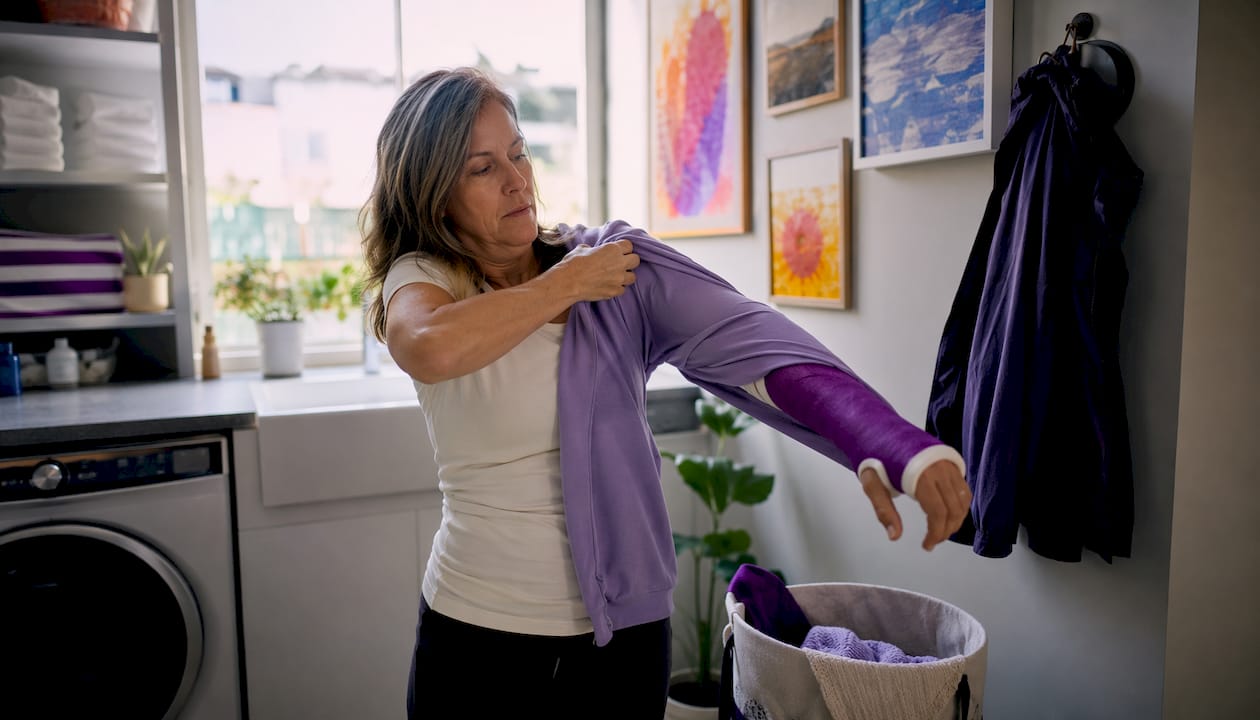
Getting dressed with an arm cast is genuinely hard, but it does not have to be a painful ordeal. The fastest, safest approach: start with the injured arm first, sit down for stability, choose front-opening or stretch fabrics, and use adaptive closures like Velcro or magnets. Those four moves alone will cut your morning routine in half.
Here are the actions you can take right now:
Slide the injured arm into the sleeve first, every single time.
Use your good hand to hold the garment steady against your lap or a pillow.
Pick front-opening tops: button-front shirts, zip-front hoodies, wrap tops, or cardigans.
Choose elastic-waist pants, pull-on skirts, or drawstring sweats for the bottom half.
Sit down or brace against a wall before attempting any lower-body dressing.
Pro Tip: Magnetic closures replace buttons entirely and snap shut with one hand. If you are spending five minutes wrestling a button-front shirt every morning, one garment with magnetic snaps changes everything.
Table of Contents
What should you wear when your arm is in a cast?
The right clothing makes the difference between a five-minute routine and a frustrating fifteen-minute struggle. Front-fastening tops — cardigans, wrap tops, zip-fronts, and button-front shirts — are the gold standard because they require almost no shoulder or elbow movement to put on. You open the front, slide the cast arm in, and close. Done.
For tops, think wide and loose:
Dolman or kimono sleeves have extra-wide armholes that slide over a cast without bunching.
Ponchos and capes require zero arm threading and drape over a sling naturally.
Soft jersey wrap tops stay in place and stretch around the cast without pulling.
Oversized tees (one size up) give the armhole room to clear the cast.
Bottoms are simpler. Elastic-waist pants, pull-on leggings, drawstring sweats, and wrap skirts all work one-handed. Avoid anything with a button fly or a tight waistband — those require two hands and patience you do not have at 7 AM. Leggings paired with a long tunic or cardigan are a reliable everyday outfit that looks put-together and takes under two minutes to manage.
For bras, the front-fastening-and-rotate method works well: fasten the hook at the front of your torso, then gently rotate the bra around so the clasp sits at the back. A “bra angel” tool can help with the rotation if pain or limited range of motion makes it tricky. Front-closure sports bras are the easiest option overall.
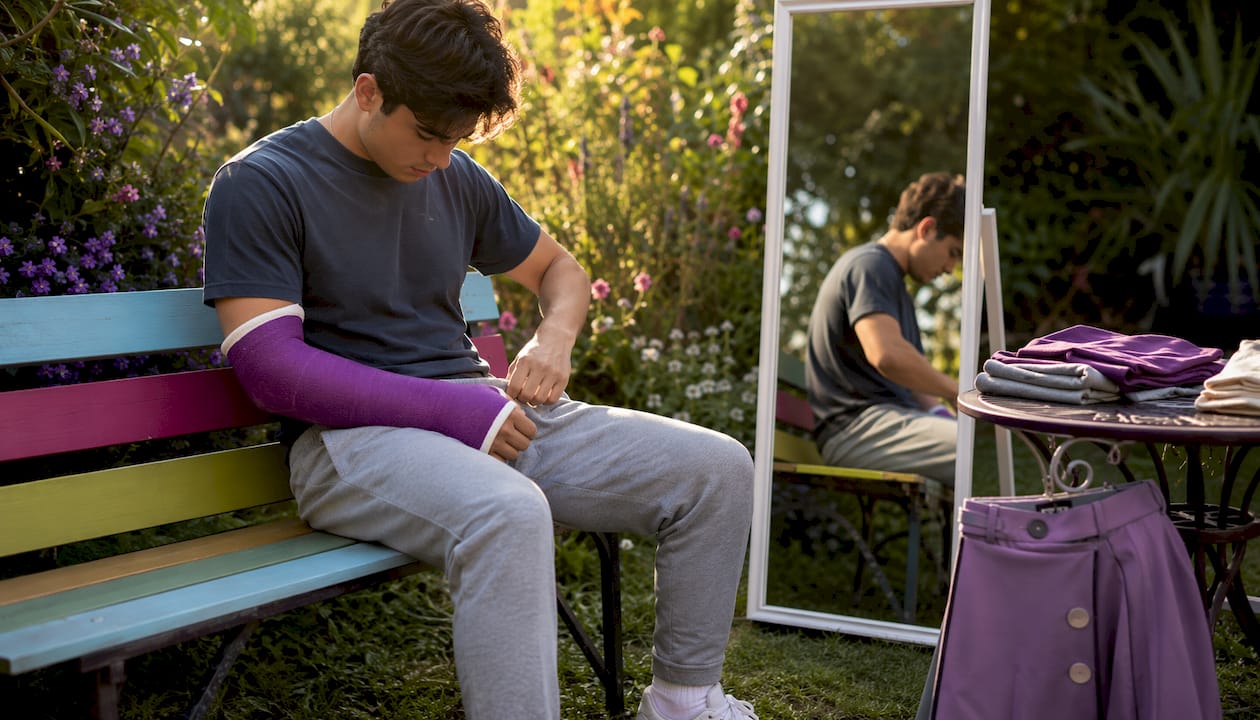
Cold weather: Drape a coat over your shoulders rather than threading both arms through. Wide-sleeve coats or oversized fleece pullovers can sometimes fit over a cast, but draping is always safer. Ponchos and blanket scarves are genuinely warm alternatives. Hot weather: Breathable cotton, bamboo, or moisture-wicking fabrics prevent the skin under and around the cast from overheating. Sleeveless tops and loose linen shirts are your best friends in summer.
For more outfit ideas with a cast, Fracture-club has a full styling guide worth bookmarking.
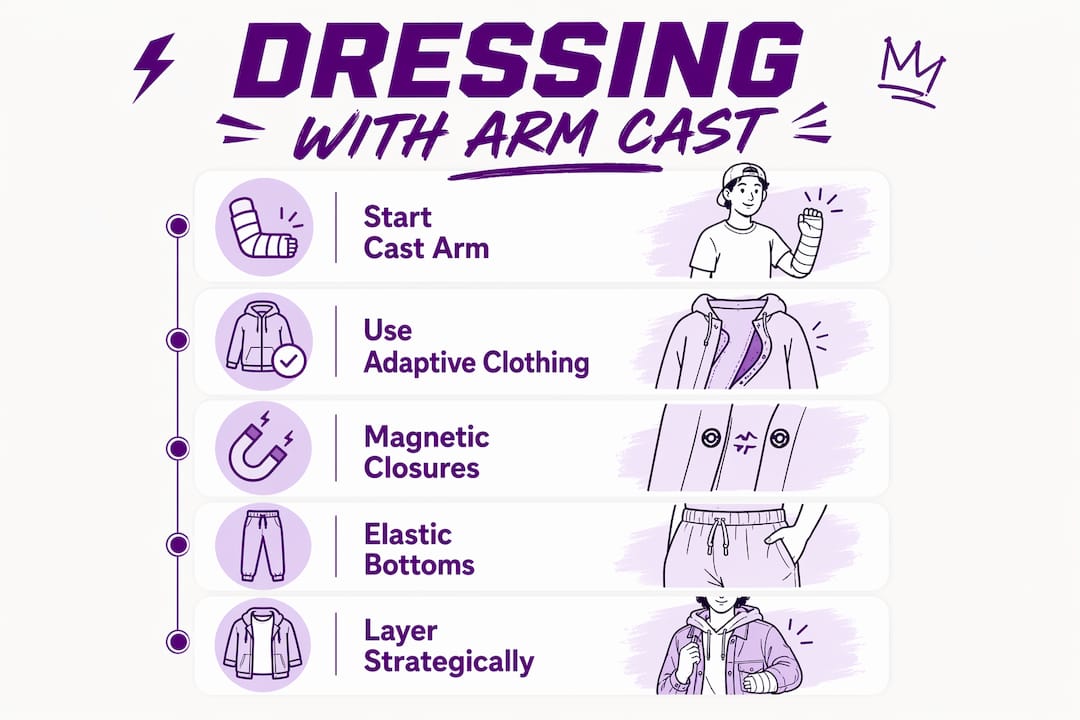
How do you get dressed step by step with one arm?
The sequence matters as much as the clothing. Follow this order every time and you will protect the injured limb and avoid unnecessary strain.
Putting on a shirt or sweater
Sit down on a bed, chair, or stable surface before you start.
Rest the injured arm on a pillow in your lap to keep it supported.
Slide the sleeve onto the injured arm first, pulling fabric up past the elbow.
Bring the garment across your back with your good hand.
Slide the good arm into its sleeve.
Adjust the neckline and hem with your good hand.
Taking off a shirt or sweater
Pull the good arm out of its sleeve first.
Ease the garment off the injured arm last, supporting the cast as you go.
Pants and bottoms
Sit on the edge of the bed.
Step the injured-side leg in first if the cast affects balance.
Pull the waistband up with your good hand, using your hips to shimmy the fabric up.
For shoes, slip-ons or elastic laces remove the need to tie anything one-handed.
Helpful dressing tools
Button hook: threads a button through its hole with a single wrist motion.
Dressing stick: hooks and pushes fabric without bending or reaching.
Sock aid: lets you pull on socks without bending forward.
Bra angel: assists with rotating or fastening a bra one-handed.
These dressing aids are low-cost and widely available, and they genuinely restore independence for daily tasks.
Pro Tip: Lay the garment flat on the bed before you start, with the opening facing up. Slide your cast arm in while the shirt is still on the mattress, then stand and pull it over your head or fasten the front. The mattress does half the work of holding the fabric steady.
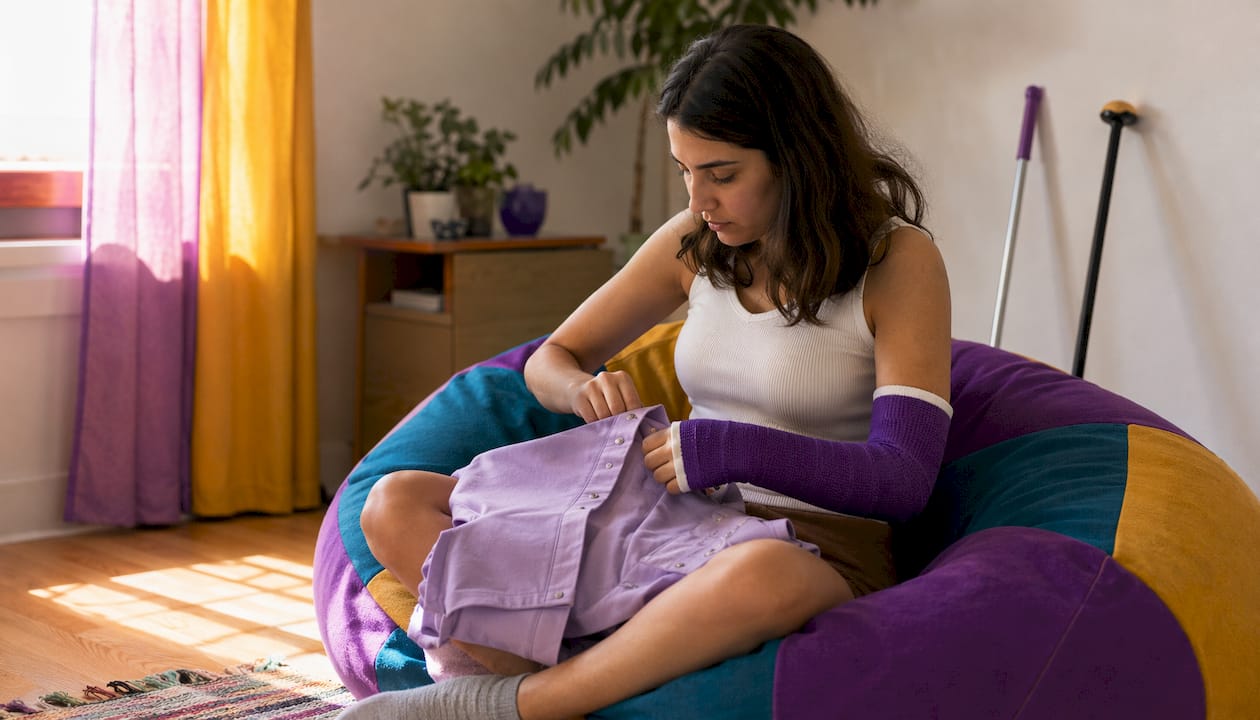
What adaptive clothing features actually make dressing easier?
Not all “easy-wear” clothing is created equal. These specific features reduce one-handed friction and protect the cast:
Magnetic closures: snap shut with one hand, no fine motor skill required. Magnetic snaps and Velcro consistently reduce dressing time and discomfort for people with limited hand function.
Wide Velcro strips: forgiving, adjustable, and easy to reopen if the fit needs tweaking.
Side zips and open-side sleeves: let you slide a cast in from the side rather than threading it through a narrow sleeve opening.
Front zips: eliminate overhead dressing entirely.
Elastic panels and stretch fabrics: accommodate cast bulk and swelling without creating pressure points.
Raglan or drop-shoulder seams: keep seam lines away from the cast edge, reducing rubbing.
Sizing note: When your arm is in a cast, size up by one in tops. The cast adds bulk, and a snug armhole will catch on the cast edge every time. If swelling is present, leave extra room at the wrist opening too.
Fracture-club’s easy-on/off sweatshirt and adaptive recovery pants are built around exactly these features: magnetic side openings, stretch fabric, and a fit designed to clear a cast without a struggle. They are a practical starting point if you want ready-made recovery wear rather than modifying your existing wardrobe.
For a broader look at recovery clothing options, Fracture-club’s guide covers shirts, pants, and adaptive features in one place.
How do you keep a cast dry while bathing?
Water is the enemy of a plaster cast. Do not submerge a cast unless your clinician has explicitly cleared it. For showers, waterproof cast covers with a plastic gasket seal are the safest option — they slide over the arm and create a watertight barrier at the skin.
Shower checklist:
Gather your towel, soap, and shampoo before stepping in.
Fit the waterproof cover and press the gasket firmly against the skin.
Test the seal by running a small amount of water over the covered area before fully wetting it.
Use your good arm to lather and rinse; keep the cast arm elevated or away from the spray.
Protect the cast opening at the wrist or elbow with a dry cloth if the cover does not extend that far.
Always confirm your specific cover type with your clinician or occupational therapist before use.
If standing in a shower feels unsafe, a seated shower stool changes the equation entirely. Hair washing at a sink — leaning forward with your good arm doing the work — is a reliable alternative that keeps the cast completely dry.
demonstrate these techniques visually, which can be helpful for both patients and caregivers.
Setting up a safe home environment matters too. Resources on preparing your home for recovery can help you think through bathroom safety, grab bars, and other practical adjustments.
Low-cost clothing hacks you can do at home
You do not need to buy a new wardrobe. A few simple modifications to clothes you already own can get you through the first weeks of recovery without spending much.
Cut the sleeve: On a thrifted or inexpensive long-sleeve shirt, cut the sleeve off at the shoulder seam. Finish the edge with a quick hem or iron-on tape to prevent fraying.
Add Velcro strips: Sew or iron Velcro tape onto cuffs or side openings to replace buttons or zippers.
Retrofit magnetic snaps: Magnetic snaps can be sewn into existing garments at closure points. A basic sewing kit and a few snaps cost under $10.
Safety pins as temporary closures: Pin a side seam open so the sleeve can slide over the cast, then pin it closed once the arm is through.
Elastic waistband inserts: A seam ripper and a length of wide elastic can convert a button-waist pant into a pull-on in under an hour.
One caution: when you cut or alter a garment, finish all raw edges. Rough seams against skin near a cast cause irritation fast. If the cast contacts fabric directly, add a small piece of soft foam or moleskin at the contact point to prevent pressure sores. If you need a longer-term solution or the modifications feel beyond your skill level, an occupational therapist or local tailor can make safer, more durable alterations.
How caregivers can help someone dress safely and with dignity
Helping someone get dressed with a cast requires patience, clear communication, and a consistent sequence. Rushing or guessing creates pain and erodes trust.
Explain before you touch. Tell the person what you are about to do before each step. Ask if they are ready.
Seat the person on a stable chair or bed edge with their feet flat on the floor.
Support the injured limb on a pillow in their lap before touching any clothing.
Slide the sleeve onto the cast arm first, easing fabric up past the elbow without lifting or rotating the arm.
Bring the garment across the back and guide the good arm into its sleeve.
Fasten closures using the person’s good hand where possible, or assist only as needed.
Check for pressure points at the cast edge, wrist, and elbow before finishing.
A few practical efficiency tips:
Pre-open all fastenings before the session starts.
Keep a small basket of commonly worn garments within arm’s reach of the dressing area.
Use a second pillow for lap support if the person is seated in a low chair.
Never use the injured arm to bear weight or assist with balance.
For more detailed guidance, Fracture-club’s caregiver Q&A guide covers common questions in a format that is easy to share with family members.
Common dressing problems and how to fix them
Cast rubbing and skin irritation
Rough seams or tight fabric edges pressing against the cast edge cause skin breakdown quickly. Choose garments with smooth, flat seams near the cast area. If a seam rubs, turn the garment inside out or add a thin layer of soft fabric between the cast and the clothing.
Swelling changes the fit
Swelling is normal in the first days after injury. If a sleeve that fit yesterday now feels tight, loosen the layer or switch to a sleeveless top. If swelling increases significantly, feels hot, or is accompanied by numbness or increased pain, contact your clinician.
Cast catching on clothing
This usually means the sleeve opening is too narrow. Switch to open-side sleeves, raglan cuts, or sleeveless tops. A dressing stick can also guide fabric over the cast without snagging.
Cold-weather fixes
Cut a mock sleeve from a thrifted shirt and wear it over the cast for warmth without bulk.
Layer a breathable base layer under the cast side if your clinician permits.
Drape a wide-sleeve coat or oversized fleece over both shoulders.
Ponchos and blanket scarves add real warmth with zero arm-threading required.
Footwear and lower-body mobility
Slip-on shoes, elastic laces, and loafers eliminate the need to tie anything one-handed. If bending to reach your feet is difficult because of cast weight or balance issues, a long-handled shoe horn and a sock aid solve both problems. For more on lower-body dressing solutions, Fracture-club’s leg cast clothing guide covers similar principles for the lower limbs.
Jewelry and accessories
Remove rings, bracelets, and watches from the injured arm before the cast goes on — swelling makes removal impossible afterward. On the good arm, keep jewelry simple and easy to manage one-handed. Magnetic or toggle clasps on necklaces and bracelets are far easier than standard lobster-claw clasps.
When to call your clinician: Numbness, tingling, a foul smell from the cast, visible skin discoloration around the cast edges, or pain that worsens after dressing are all signs that need medical attention. Do not wait.
Key Takeaways
Getting dressed with an arm cast is manageable when you follow the right sequence, choose the right fabrics, and use adaptive closures that work with one hand.
Point | Details |
Injured arm goes in first | Always sleeve the cast arm before the good arm; reverse the order when undressing. |
Sit down every time | Seated dressing protects balance and keeps the injured limb supported on a pillow. |
Choose front-open or stretch fabrics | Cardigans, wrap tops, elastic-waist pants, and ponchos require minimal arm movement. |
Use adaptive closures | Magnetic snaps and wide Velcro replace buttons and zippers for one-handed dressing. |
Fracture-club adaptive wear | Fracture-club’s easy-on/off sweatshirt and magnetic-zip pants are designed to clear a cast without a struggle. |
Why adaptive clothing matters more than most people realize
The conventional wisdom around dressing with a cast tends to focus on workarounds: wear bigger clothes, ask someone for help, manage as best you can. That framing treats the problem as temporary and minor. It is neither.
Struggling to dress yourself every morning for six or more weeks is not just inconvenient. It chips away at your sense of independence, and that matters for recovery. Adaptive clothing restores daily routine and reduces the emotional weight of feeling dependent on others for basic tasks. That is not a small thing.
What people underestimate is how much the right garment design changes the physical experience. A magnetic closure does not just save time. It removes the pain spike that comes from fumbling a button with swollen fingers. A side-zip sleeve means you are not torquing your wrist to thread a cast through a narrow opening. These are not luxury features. They are functional solutions to a real physical problem.
Fracture-club was built on exactly this understanding. Their recovery wear combines practical adaptive features with a design that does not make you look or feel like a patient. That combination — function and dignity — is what actually helps people get through recovery with their confidence intact.
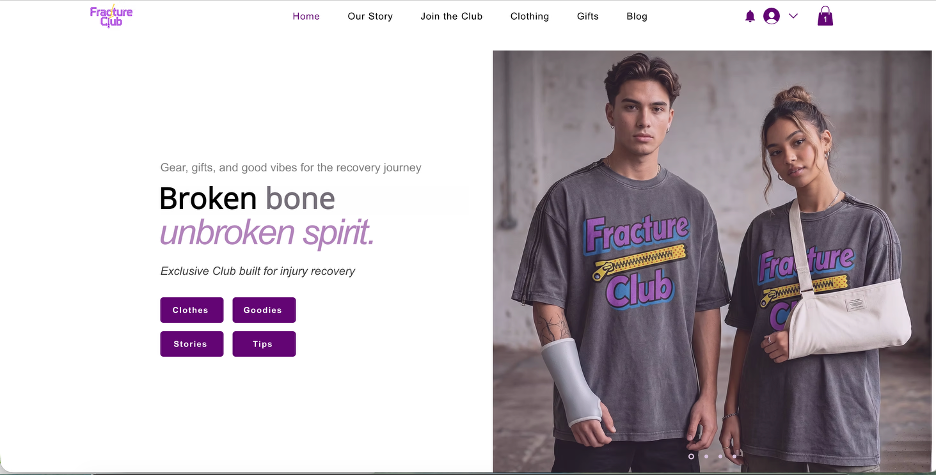
Fracture-club adaptive recovery clothing: ready when you are
Recovery is hard enough without fighting your wardrobe every morning. Fracture-club’s adaptive recovery wear is built specifically for people healing from upper-limb injuries, and the difference is immediate.
[
](fracture-club.com)
The Unisex Easy-On/Off Sweatshirt features magnetic side openings and a stretch fabric that slides over a cast without pulling or catching. The adaptive recovery pants use side magnetic zippers so you can dress your lower half one-handed in under two minutes. Both are sized to accommodate cast bulk — size up one if you are between sizes or if swelling is present.
A portion of every purchase goes to the Bone Health & Osteoporosis Foundation, so your recovery supports a broader community too. If you need sizing help or have questions about fit with a specific cast type, reach out through the Fracture-club inquiry page. Shop the full recovery wear collection at fracture-club.com and get dressed on your own terms again.
Useful sources and further reading
The guidance in this article draws on clinical patient leaflets, adaptive clothing resources, and practical how-to content. For cast-specific instructions, always confirm with your treating clinician or occupational therapist first.
Managing Tasks at Home Using One Hand — Kingston and Richmond NHS Foundation Trust: Clinical leaflet covering dressing sequence, dressing aids, and cast care.
ESHT Patient Information Document: Includes the front-fastening-and-rotate bra technique and personal care guidance after surgery.
Adaptive Clothing for a Broken Arm — Adaptive Clothing Australia: Practical overview of magnetic and Velcro closures and their benefits.
Adaptive Clothing for a Broken Arm: Dressing Made Simple — Springrose: Garment type recommendations and emotional well-being framing.
How Do You Wear Clothes Over an Arm Cast? — Bliss Tulle: DIY hacks, sleeve modifications, and practical outfit ideas.
How to Wear a Shirt and an Arm Cast in Cold Weather — CHASA: Cold-weather strategies including mock sleeve cuts and layering.
How to Shower With an Arm Cast — YouTube: Visual demonstration of shower and hair-washing techniques for cast wearers.
Fracture-club Recovery Wear: Adaptive clothing, gifts, and community resources for people healing from fractures.
This article is general information, not medical advice. Confirm cast care, dressing techniques, and any modifications with your clinician or occupational therapist for your specific situation.
Recommended
Comments