
Why Dressing Is Hard After Injury: What You Need to Know

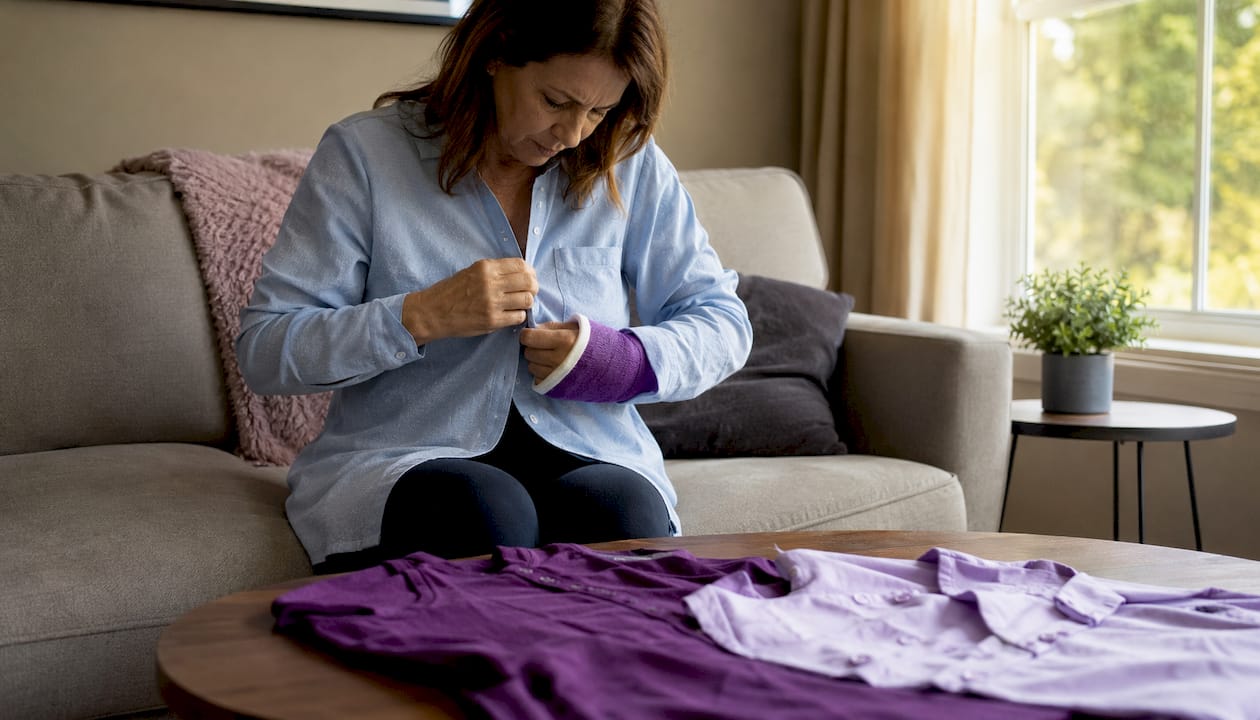
Dressing difficulty after injury is defined in occupational therapy as the disruption of a complex, multi-step daily task caused by physical, cognitive, or environmental impairments. Most people assume getting dressed is simple. After an injury, you quickly learn it is not. Dressing requires simultaneous coordination of motor skills, balance, spatial awareness, and memory, all working together in a sequence your brain once ran on autopilot. When injury disrupts any one of those systems, the entire routine breaks down. Understanding why this happens is the first step toward doing something about it.
Why dressing difficulty after injury happens
Dressing is one of the most physically and cognitively demanding activities of daily living. Occupational therapists classify it as an instrumental self-care task because it requires your body and brain to cooperate across multiple systems at once. A shoulder fracture limits your range of motion. A back injury makes bending painful. A neurological event disrupts the sequencing your brain uses to layer clothing in the right order.
Systematic reviews identify task segmentation and environment modification as the most common interventions for restoring independent dressing. That finding tells you something important: the problem is real enough that entire rehabilitation frameworks exist to address it. Post-injury dressing issues are not a sign of weakness. They are a predictable consequence of disrupted systems that once worked together without effort.
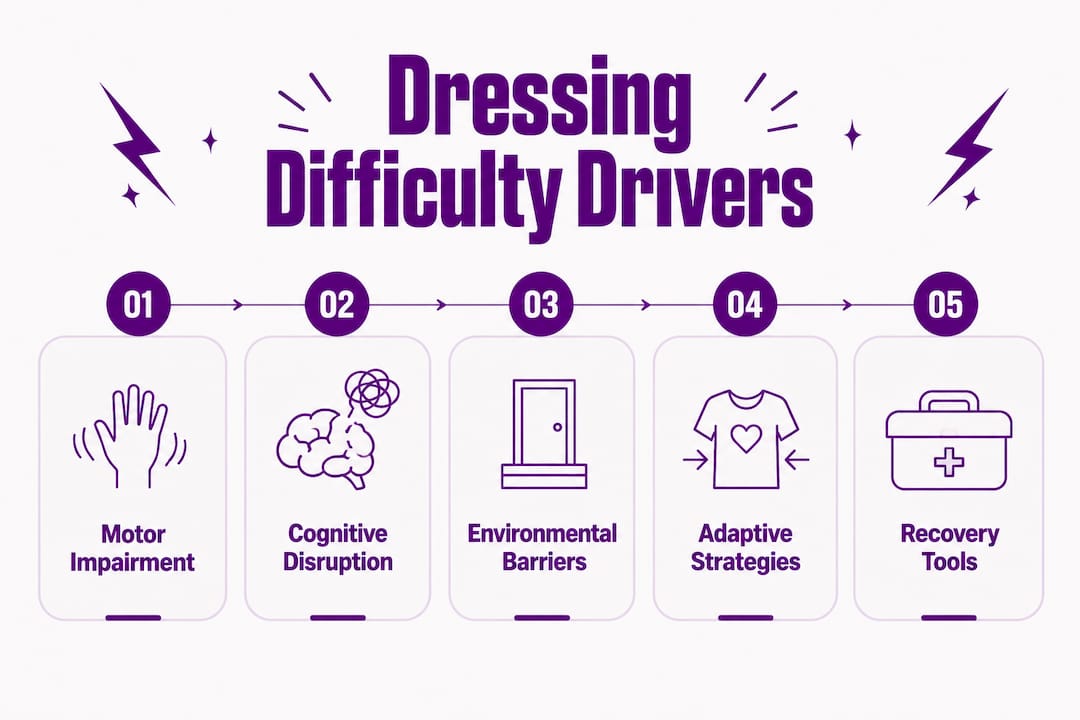
The three core drivers of dressing complications post-injury are motor impairment, cognitive disruption, and environmental mismatch. Each one compounds the others. A person with limited grip strength who also has trouble sequencing steps faces a much harder challenge than someone dealing with only one of those factors.
How do physical impairments from injuries affect dressing ability?
Motor impairment is the most visible reason dressing becomes hard after injury. Muscle weakness, reduced range of motion, and balance problems all directly interfere with the physical mechanics of putting on clothes.
Consider what pulling a shirt over your head actually requires: shoulder flexion past 90 degrees, grip strength to hold the fabric, core stability to stay upright, and bilateral arm coordination. A rotator cuff tear eliminates several of those at once. A lower limb fracture makes standing to pull on pants unsafe without support.
Common physical barriers to dressing after injury include:
Muscle weakness from disuse or nerve damage, making it hard to grip, lift, or hold clothing
Limited range of motion in injured joints, blocking the movements needed to reach behind your back or lift your arms overhead
Balance problems that make standing on one leg to step into pants genuinely dangerous
Pain that discourages movement and causes people to rush or skip steps, increasing fall risk
Swelling and bracing from casts or splints that change the shape of your limbs and make standard clothing impossible to fit
Back injuries deserve special mention. Lumbar injuries restrict forward bending, which is required for putting on socks, shoes, and pants. People with back injuries often compensate with awkward postures that increase pain and risk of re-injury. The same applies to shoulder injuries, where reaching across the body or behind the back becomes a significant obstacle.
Pro Tip: Always dress the injured side first and undress it last. This reduces the range of motion required from the injured limb and lowers your risk of strain during the process.
Seated dressing is one of the most effective physical adaptations available. Sitting on a stable chair or bed edge eliminates the balance demand entirely, freeing your attention and energy for the task itself. Many occupational therapists introduce seated dressing as a first intervention before any equipment is added.
In what ways do cognitive challenges contribute to dressing difficulties?
Physical ability alone does not determine whether someone can dress independently. Cognitive impairments affecting spatial processing can hinder dressing even when physical ability remains sufficient. This is one of the most underappreciated aspects of post-injury dressing issues.
Dressing follows a sequence: underwear before pants, shirt before jacket, socks before shoes. That sequence feels obvious when your brain is working normally. After a neurological injury, stroke, or traumatic brain injury, the executive function that manages sequencing can break down. You may know what you want to do but find yourself unable to organize the steps.
Cognitive challenges that disrupt dressing include:
Executive dysfunction, which impairs planning and the ability to initiate or switch between steps
Spatial cognitive processing deficits, which make it hard to orient clothing correctly relative to your body
Working memory gaps, which cause people to lose track of which steps they have completed
Attention fatigue, which turns a 10-minute task into an exhausting 40-minute ordeal
Occupational therapists emphasize that frustration is natural when the brain and body struggle to coordinate a once-automatic task. Cognitive rehabilitation is as vital as physical recovery for dressing independence, because the brain must relearn to manage what it once did without thinking.
The practical implication is significant. If you are recovering from a neurological injury and struggling with dressing, the problem may not be your hands or your strength. It may be the way your brain is currently processing spatial information and managing multi-step sequences. Verbal cues, written checklists, and simplified routines are all tools that occupational therapists use to support cognitive recovery alongside physical rehabilitation.
What adaptive strategies and tools help ease dressing difficulties?
The good news is that a wide body of clinical practice addresses exactly these challenges. Occupational therapy interventions use sequential task breakdown, environment adaptations, verbal cues, and compensatory resources to improve dressing outcomes.
Adaptive clothing features to look for
Adaptive clothing with magnetic closures, front openings, and elastic waistbands significantly reduces pain and effort during dressing after injury. These features accommodate casts, slings, and limited mobility without requiring the wearer to contort around standard buttons or zippers. Look for:
Magnetic or Velcro closures instead of buttons
Side-opening or wrap-style pants that eliminate the need to step through a waistband
Raglan or open-back shirt designs that work around shoulder injuries
Elastic waistbands that stretch over casts or bracing
Fracture-club designs recovery wear specifically for people healing from fractures and surgeries. Their adaptive recovery pants use side magnetic zippers that open wide enough to accommodate a cast or brace without requiring the wearer to bend or balance on one leg.
Assistive dressing devices
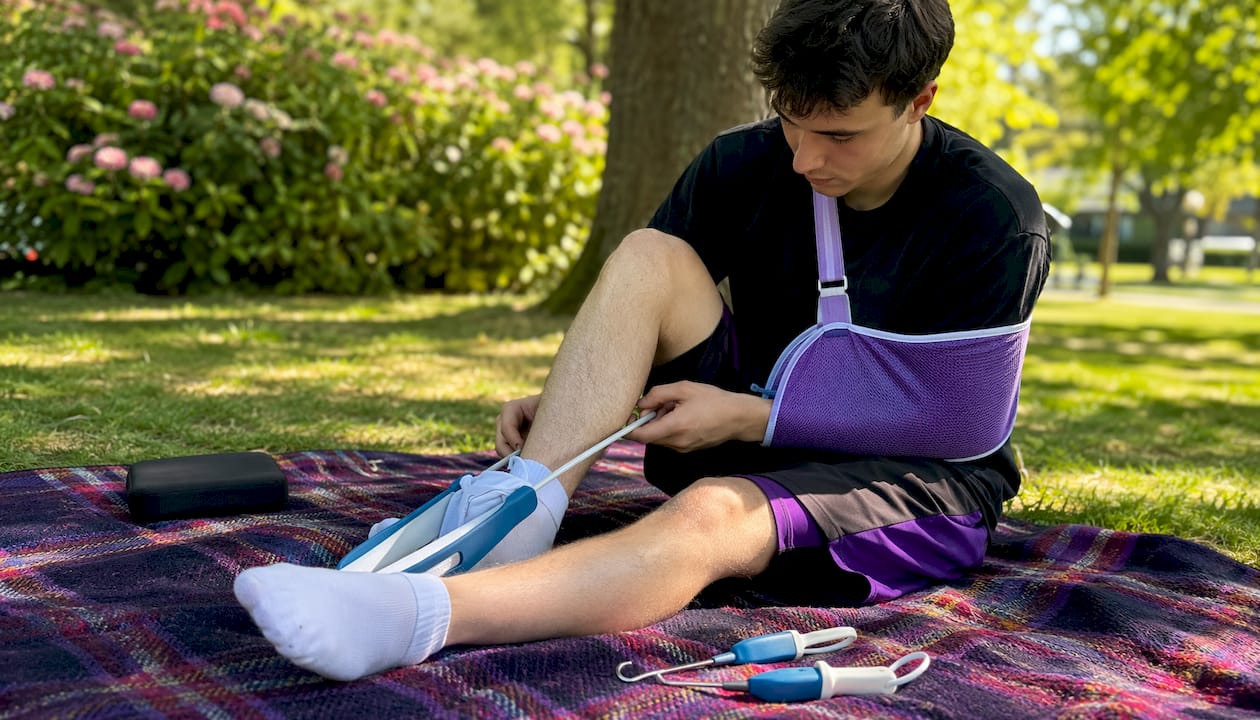
Using assistive devices like button hooks, dressing sticks, and sock aids improves dressing efficiency and safety after injury. These tools extend your reach and reduce the grip and flexibility demands of dressing. Common options include:
Sock aids: A plastic or fabric shell that holds the sock open so you can slide your foot in without bending
Dressing sticks: A long-handled hook used to pull up pants, push sleeves into position, or retrieve dropped clothing
Button hooks: A wire loop on a handle that threads through buttonholes to fasten buttons with minimal grip
Long-handled shoehorns: Allow you to put on shoes without bending forward
Reacher grabbers: Extend your reach to pick up clothing from the floor or a low surface
Pro Tip: Lay out your clothing the night before in the exact order you will put it on. This removes the cognitive load of decision-making from the morning routine and reduces the chance of sequencing errors when you are tired.
Environmental and behavioral adjustments
Sit on a firm chair with armrests while dressing. Keep clothing at waist height to avoid overhead reaching. Use a non-slip mat under your feet. These small changes reduce fall risk and physical strain without requiring any special equipment. A slip-resistant hospital sock worn during dressing can also reduce the risk of sliding on hard floors while you manage clothing with one hand.
How do dressing challenges post-injury impact independence and recovery?
Dressing ability is one of the primary markers clinicians use to assess functional independence. When someone struggles to dress, it signals that other activities of daily living are likely affected too.
A sudden decline in dressing ability can indicate worsening physical or cognitive health and signals the need to reassess rehabilitation and support plans. Health professionals treat dressing difficulty as a clinical red flag, not a minor inconvenience. Families are advised to take dressing struggles seriously as indicators of broader functional change.
Dressing difficulty often masks broader functional decline. Ignoring it can increase caregiver burden and lead to falls and secondary injuries. Health professionals monitor dressing ability as a vital functional status indicator.
The emotional weight of dressing difficulty is real and often underestimated. Needing help to dress can feel deeply personal. It affects dignity, privacy, and the sense of being in control of your own body. For caregivers, repeated assistance with dressing adds physical and emotional strain over time. Addressing dressing challenges early, through adaptive tools, clothing, and therapy, protects both the person recovering and the people supporting them.
Recognizing dressing difficulty as a meaningful clinical signal rather than a temporary inconvenience changes how you approach recovery. It motivates earlier intervention, clearer communication with your care team, and a more realistic timeline for regaining independence.
Key Takeaways
Post-injury dressing difficulty results from the breakdown of motor coordination, cognitive sequencing, and environmental fit, all of which are addressable through targeted rehabilitation and adaptive tools.
Point | Details |
Motor impairment drives physical barriers | Weakness, limited range of motion, and balance problems make standard dressing unsafe or impossible. |
Cognitive deficits disrupt sequencing | Spatial processing and executive dysfunction can block dressing even when physical strength is adequate. |
Adaptive clothing reduces effort | Magnetic closures, side openings, and elastic waistbands accommodate casts and bracing without strain. |
Assistive devices extend independence | Sock aids, dressing sticks, and button hooks reduce grip and flexibility demands during dressing. |
Dressing ability is a recovery marker | Sudden decline in dressing function signals broader health changes and warrants prompt clinical review. |
What I’ve learned about dressing struggles that most articles miss
People underestimate how much of dressing is cognitive, not just physical. I have seen recovering patients with strong arms and decent range of motion still struggle to put on a shirt because their brain cannot sequence the steps reliably. That gap between physical capacity and functional performance is where a lot of frustration lives.
The other thing most people get wrong is expecting linear progress. Some mornings dressing will feel manageable. Other mornings, fatigue or pain will make it feel impossible again. That is not regression. That is recovery. The goal is not perfection every day. The goal is building a system that works on your hardest days, not just your best ones.
Adaptive clothing and assistive tools are not admissions of defeat. They are the same logic as using a cast: you use the right tool for the stage of healing you are in. The best way to get dressed after a fracture or surgery is the way that keeps you safe, preserves your energy, and lets you move through your day with some dignity intact. That matters more than doing it the “normal” way.
— Fracture
Recovery wear that makes dressing easier from day one
Dressing after an injury should not feel like a second injury. Fracture-club designs recovery clothing specifically for people healing from fractures, surgeries, and mobility-limiting conditions.
[
](fracture-club.com)
Their adaptive sweatshirt for upper limb injuries and magnetic zipper recovery pants are built around the real mechanics of post-injury dressing: wide openings, magnetic closures, and designs that work with casts and braces rather than against them. A portion of every purchase supports the Bone Health & Osteoporosis Foundation. You can also visit the Fracture-club inquiry page to find the right fit for your recovery stage.
FAQ
Why is dressing so hard after an injury?
Dressing requires coordinated motor skills, balance, spatial awareness, and cognitive sequencing. An injury disrupts one or more of these systems, turning a previously automatic task into a complex physical and mental challenge.
What is the best order to dress when you have an injured limb?
Always dress the injured side first and undress it last. This approach minimizes the range of motion required from the injured limb and reduces strain throughout the process.
Can cognitive problems cause dressing difficulty after injury?
Yes. Neurological injuries cause dressing disability through spatial cognitive processing deficits, meaning a person may understand what to do but fail at the sequencing and spatial steps required to complete dressing independently.
What assistive tools help most with post-injury dressing?
Sock aids, dressing sticks, button hooks, and long-handled shoehorns are the most commonly recommended tools. They reduce the grip, flexibility, and reach demands that standard dressing requires.
When should dressing difficulty be reported to a doctor?
A sudden decline in dressing ability is a clinical red flag for worsening physical or cognitive health. Report any new or worsening dressing difficulty to your care team promptly so your rehabilitation plan can be reassessed.
Recommended
Comments