
Dress One Handed After Hand Surgery in Under a Minute with OT Tips

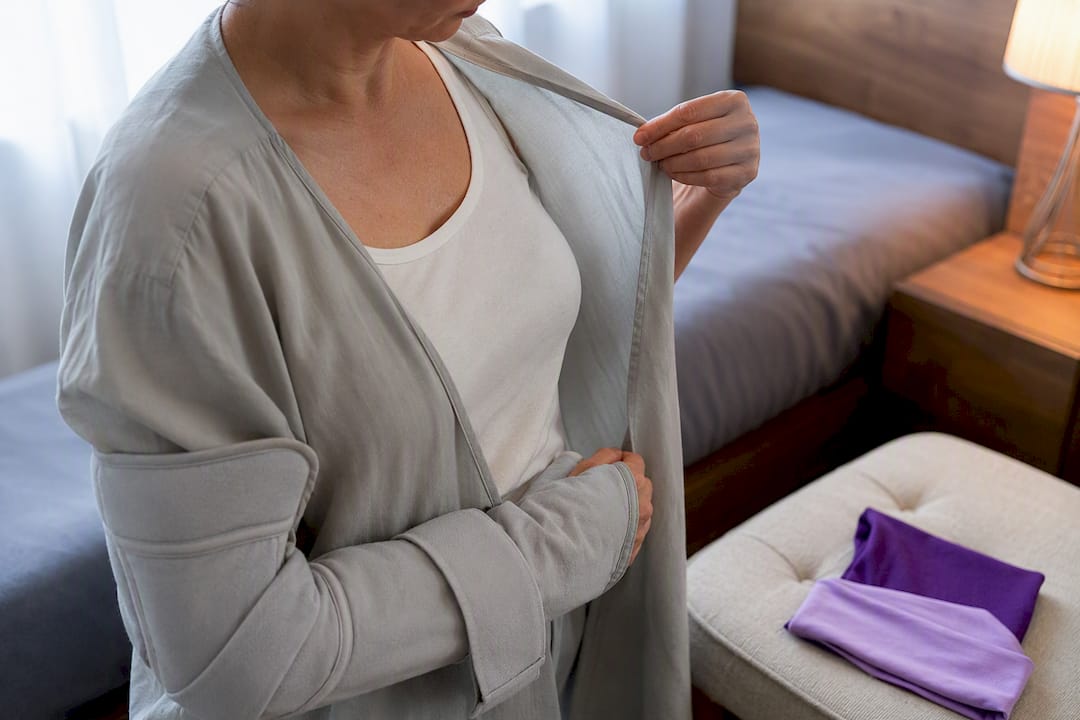
The best clothes for hand surgery recovery share three features: an open-front or open-back design so you never have to force an injured arm through a tight sleeve, magnetic or Velcro closures instead of buttons and zippers, and enough room in the sleeves and waist to clear a cast, splint, or bulky dressing without a struggle.
TL;DR:
Open-front or open-back clothing design makes dressing easier and reduces strain on healing limbs, especially when managing casts or splints.
Magnetic closures and oversized Velcro tabs replace buttons and zippers, simplifying dressing tasks for limited hand function.
Wearing clothes one size larger accommodates swelling and expands layering options over bulky dressings without tight seams.
Prioritizing soft, breathable, seam-free fabrics minimizes skin irritation and allows comfortable, yet functional, recovery wear.
Using dressing aids like long-handled shoehorns and button hooks can drastically reduce effort and frustration during daily dressing routines.
Table of Contents
What Clothes Work Best for Hand Surgery Recovery?
Look past the fashion racks and think in terms of access. Every garment you own is designed around the assumption that both hands work. After hand surgery, that assumption falls apart the first time you try to button a cuff with one working thumb.
Open-back or open-front tops let you slide the garment on without threading an arm through a narrow sleeve opening.
Magnetic closures and oversized Velcro tabs replace the fine motor work that buttons and zippers demand, a swap that low-tech adaptive-garment research has repeatedly identified as a practical solution for people with limited hand function.
Drop-shoulder or wide-set sleeves give a cast or splint room to pass through without catching fabric or pulling at healing tissue.
Elastic waistbands and side-opening pants mean you’re not fighting a zipper fly with your non-dominant hand.
Open-back garments make sense when you’re managing a sling or need someone else to dress you quickly, since the fabric falls open flat rather than requiring an overhead pull. Open-front garments tend to work better for people who can dress themselves and want more privacy and a look closer to a normal shirt. Either way, adaptive clothing designed with open backs, magnetic closures, and elastic waists shows up again and again in guidance for anyone with limited upper-limb function, not just hand surgery patients.
Undergarments matter more than people expect. A front-closing bra with wide hook-and-loop tabs solves a problem that trips up more patients than any outerwear choice. Pants with a side zipper or magnetic seam let you step in and pull up one-handed, instead of hopping around trying to manage a button fly.
How Do You Dress and Undress Safely With One Hand or a Cast?
Sequence matters as much as the clothing itself. Occupational therapists teach a simple rule: dress your affected arm first, undress it last. Putting the injured arm through a sleeve while you still have full range of motion in your good arm is far easier than trying to maneuver a sleeve over a stiff, healing limb after your good arm is already trapped in the garment.
Here’s a dressing sequence that works for most tops and bottoms:
Sit down. Balance and safety matter more than speed, especially in the first few weeks.
Lay the garment across your lap with the label facing up and the affected-side sleeve or opening closest to you.
Guide the injured arm into its sleeve or opening first, using your stronger hand to hold the fabric steady.
Pull the garment over your head or shoulders, then finish with your unaffected arm.
For pants, sit and thread both legs in before standing to pull them up, bracing yourself if balance is a concern.
Dressing aids close the gap that a single working hand can’t. A button hook lets you fasten buttons you can’t otherwise reach one-handed. A zipper pull gives you something to grip besides a tiny metal tab. A dressing stick helps push sleeves and waistbands into place, and a long-handled shoehorn removes the need to bend or twist your wrist to get shoes on. These tools are standard recommendations in occupational therapy dressing guides, and most cost less than a takeout dinner.
Pro Tip: If you’re still fumbling after a week of practice, that’s not a personal failure. It’s a signal. Ask your surgeon for a referral to occupational therapy. An OT assessment usually takes under an hour and gives you a customized dressing plan instead of generic advice.
Which Fabrics and Fits Are Safest for Healing Hands?
Skin under a cast or dressing is more sensitive than usual, and the fabric touching it needs to work with your recovery, not against it. Prioritize soft, breathable knits like cotton jersey or modal blends. These fabrics move with your body instead of dragging against it, which matters when a healing wrist can’t tolerate friction.
Tagless construction avoids scratchy labels rubbing against skin that’s already inflamed or sensitive.
Flat, seamless construction near the wrist and forearm prevents pressure points where a seam meets a cast edge.
Sizing one size up gives swelling room and leaves space to layer a sleeve over a bulky dressing without stretching seams to their limit.
Avoid slippery synthetics like polyester satin or rayon blends that slide around mid-dressing and make one-handed adjustments harder, not easier.
Skip anything with a snug, clingy fit through the shoulders, since that’s exactly where you need slack to maneuver a cast through.
Fit changes week to week. What fits over a fresh post-surgical dressing in week one may swim on you once swelling goes down and a smaller brace replaces the bulkier one. Buying one size up from your normal fit, rather than your surgical-week fit, tends to cover both stages better.
Shopping and Sizing Checklist Before You Buy
Ordering adaptive clothing without trying it on first means a few extra minutes of prep saves you a return hassle later. Measure yourself, or have a caregiver measure you, while wearing your current cast, splint, or dressing, not before it went on. That’s the fit you actually need.
Confirm the closure type before buying. Magnetic closures should be enclosed in fabric so the magnet never touches skin directly, and Velcro tabs should be large enough to manage with limited grip strength.
Check the return policy first, since sizing over a cast is genuinely hard to predict from a screen.
Look for product photos showing real casts, slings, or braces, not just a model in a neutral pose. That’s the clearest signal a brand actually designed for this use case.
Read reviews specifically mentioning fit over a brace or cast, since general reviews rarely address the fit question you actually care about.
Prioritize one easy-on/off top and one pair of elastic-waist pants first. Two well-chosen pieces you can wear on repeat beat a full wardrobe of adaptive basics you never get around to buying.
How Do You Wash Adaptive Clothing Without Ruining the Closures?
Magnetic and Velcro closures survive the wash better with a few small habits. Fasten every closure before the garment goes in the machine. Loose magnets and open Velcro tabs snag on other fabric and wear out faster than closed ones.
Use a mesh garment bag or the gentle cycle to cut down on agitation that stresses stitched-in magnets.
Air-dry or use low heat. High heat can weaken the adhesive or stitching that holds magnets and Velcro in place over time.
Skip bleach and fabric softener. Both break down the stretch fibers and closure materials faster than a plain, mild detergent would.
Check closures every few washes for loose stitching or Velcro that’s lost its grip, and repair or replace before the garment fails you mid-dressing.
Manufacturer care labels take priority over general advice, since closure materials vary between brands.
Do Seasonal Changes Affect What You Should Wear After Hand Surgery?
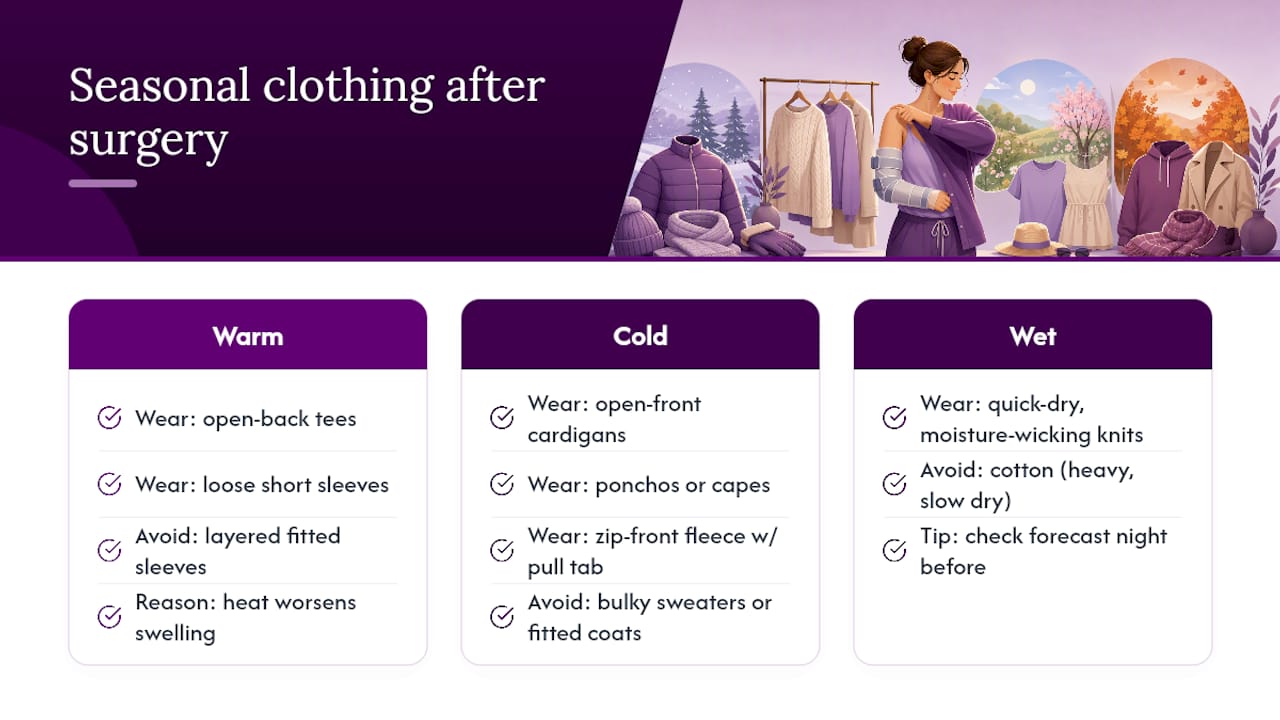
Recovery timelines don’t pause for weather, so your wardrobe needs to flex across seasons if your healing stretches from summer into fall or winter into spring. Warm weather makes lightweight, open-back tees and loose short sleeves the easiest choice, since you’re not layering over a cast and heat makes swelling worse if fabric traps it against skin.
Cold weather adds a real complication: bulky sweaters and coats are almost impossible to manage one-handed, and a cast makes a normal jacket sleeve nearly unusable. Look for open-front cardigans, ponchos, or capes that drape over shoulders instead of requiring an arm to thread through a fitted sleeve. A zip-front fleece with a large pull tab works better than a pullover hoodie during winter recovery. Layering thin, soft base layers under an open-front outer piece also helps you regulate temperature without needing to remove and re-thread a heavier garment throughout the day.
Rain and humidity bring their own problem: damp fabric clings and resists easy removal. Quick-dry, moisture-wicking knits handle unpredictable weather better than cotton, which gets heavy and slow to dry once it’s wet. If you’re heading into an appointment or physical therapy session, checking the forecast the night before saves you from being stuck deciding between a sleeve you can’t get on and a coat you can’t zip.
What Shoes and Accessories Make Dressing Easier Overall?
Clothing solves most of the dressing problem, but shoes and small accessories close the remaining gap. Slip-on sneakers, clogs, or shoes with elastic laces remove the need for tying, which is nearly impossible with one functioning hand. A long-handled shoehorn, mentioned earlier for dressing sequences, does double duty here by helping you get shoes on without bending or twisting an injured wrist for balance.
Beyond footwear, a few accessories consistently make daily dressing less frustrating. A dressing stick helps pull up pants or push a sleeve into place without needing a second working hand for stability. A sock aid removes one of the more awkward one-handed tasks entirely. Front-fastening bras and elastic-waist bottoms, covered earlier, count as accessories in the sense that they remove entire categories of struggle rather than just easing them.
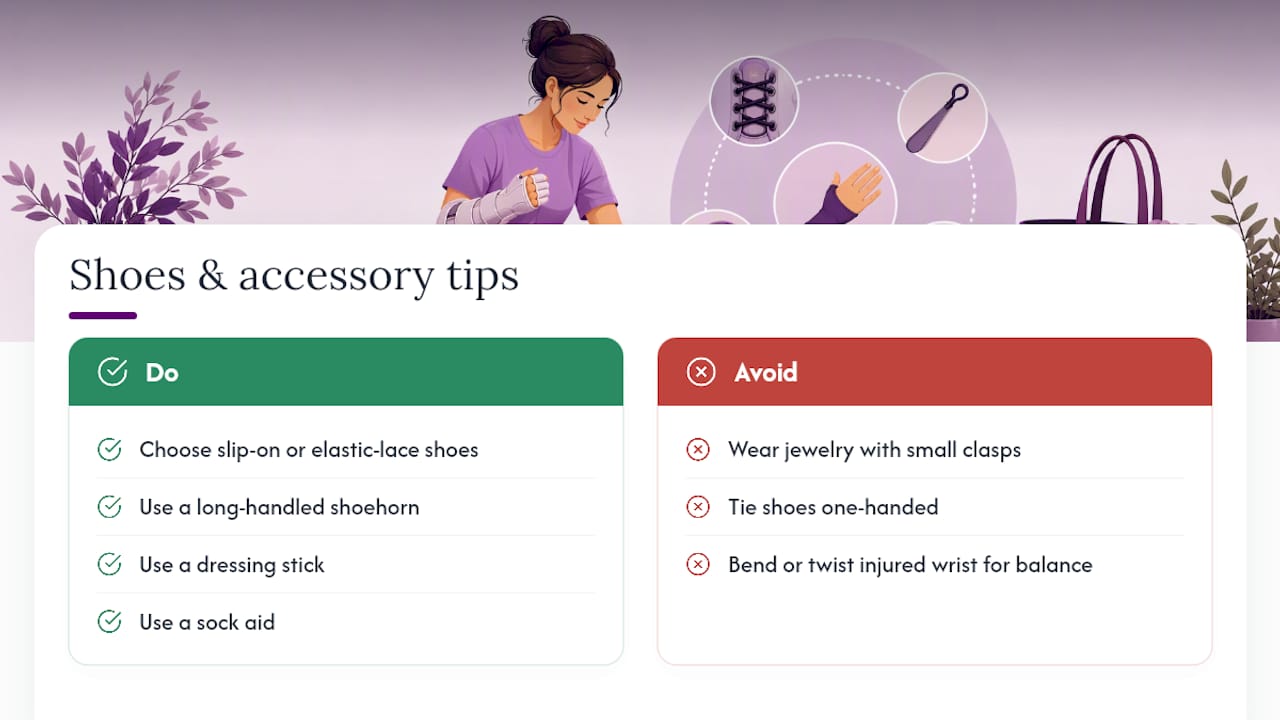
Jewelry and watches deserve a mention too. Skip anything with a small clasp during recovery. Slip-on bracelets, stretch-band watches, or simply going without for a few weeks avoids the frustration of fighting a clasp you can’t manage one-handed. The goal across every accessory choice is the same: reduce the number of small, fiddly motions your recovering hand has to perform in a day, since those tiny tasks add up to real fatigue faster than people expect.
Why Does Clothing Choice Affect Mood and Confidence During Recovery?
Struggling to get dressed every morning wears on you in ways that have nothing to do with your hand. Needing help with a task you’ve done independently your entire life, something as basic as putting on a shirt, chips away at a sense of control right when you need it most. That frustration compounds if it happens daily for weeks.
Clothing that works with your recovery instead of against it removes a recurring source of stress before your day even starts. There’s a real difference between waking up dreading the ten minutes it takes to get dressed and waking up knowing you can manage it yourself in under a minute. That difference shows up in mood, not just logistics.
Adaptive clothing also carries an identity benefit that’s easy to underestimate. Wearing something that still looks like your normal clothes, rather than something that visibly signals “patient,” helps you feel like yourself on days when your body doesn’t cooperate. Retailers building adaptive lines have picked up on this, and style parity between adaptive and mainstream clothing makes adaptive clothing feel more meaningful to many people and encourages more consistent use. Feeling like a patient all day is exhausting. Clothing that lets you feel like yourself, even for a few hours, is worth more than it sounds on paper.
What Should You Avoid Wearing After Hand Surgery?
Certain garment features actively work against you during recovery, and knowing what to avoid saves you from wasted purchases and painful mornings.
Tight sleeves top the list. Anything fitted through the forearm or wrist won’t clear a cast or splint, and forcing a sleeve over swollen or bandaged skin risks real pain and pressure damage. Small buttons come next. Even people with full hand function find shirt buttons fiddly; with one hand out of commission, they become nearly impossible and waste energy better spent on recovery.
Tight or high necklines cause a different problem. Pullover tops that require stretching a narrow neck hole over your head force your injured arm into an overhead motion your surgeon has likely told you to avoid in the early weeks. Skip anything with a snug crew neck or turtleneck until you have full shoulder and arm mobility back.
A few more patterns to steer clear of: zippers with small pull tabs, belts with buckles instead of elastic, and shoes that require tying. None of these are dealbreakers on their own, but stacked together across a full outfit, they turn a simple morning routine into a twenty-minute ordeal.
Fracture Club’s Take on Recovery Clothing
The gap between what recovery clothing promises and what actually helps usually comes down to one thing: whether the person designing it has thought about the moment your arm is stuck halfway through a sleeve, not just how the garment looks on a hanger. Some adaptive recovery clothing lines build around that moment specifically, aiming to strip out the daily friction points that wear people down during recovery, not just the visible ones.
Function and dignity aren’t separate goals here. A garment that’s easy to put on but looks clinical still costs you something emotionally every time you put it on. The design intent behind certain recovery clothing lines is to remove the physical barrier and the feeling of being reduced to “a patient” at the same time.
— Fracture
How Fracture Club Makes Dressing Easier During Recovery
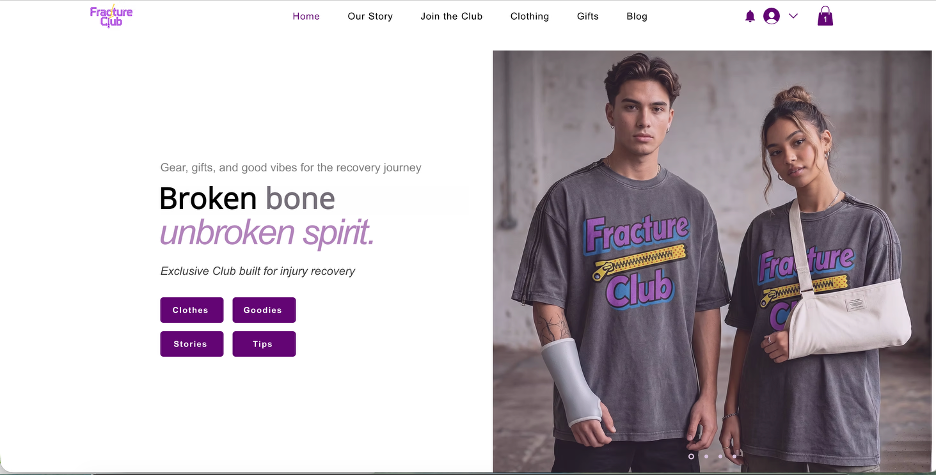
Every feature covered above, the open-back access, magnetic closures, roomy sleeves, and elastic waists, are features present in some adaptive recovery clothing lines, built specifically for people managing casts, braces, and bulky dressings.
[
](fracture-club.com)
The Unisex Easy-On/Off Sweatshirt uses drop-shoulder construction and wide openings so you can dress your injured arm first without fighting a tight cuff. Pair it with the Unisex Easy-On/Off Adaptive Recovery Pants with side magnetic zippers, which skip the button fly entirely in favor of a side opening you can manage one-handed. Both pieces cover the two highest-utility categories from the shopping checklist above: one easy top, one easy bottom, worn on rotation while you heal.
Before you order, measure over your current dressing rather than your pre-injury size, and pick neutral colors you’ll actually want to wear daily rather than just during appointments. If you need help choosing a size or have questions about fit for a specific brace, reach out through Fracture Club’s inquiry page for direct guidance before you buy.
Sources
Occupational therapy guides remain the most detailed resource for one-handed dressing technique, including the OT Toolkit’s dressing guide, which covers step-by-step sequences beyond what fits in a single article. Hospital patient leaflets like the Kingston and Richmond NHS Foundation Trust’s one-handed task guide offer practical, tested advice from clinical settings. For more on dressing techniques specific to caregivers, Fracture Club’s guide to assisted dressing and its post on dressing without raising your arm after surgery both dig deeper into topics only touched on here.
Recommended
Comments