
A Calcium-Rich Diet and Bone Strength: Your Practical Guide

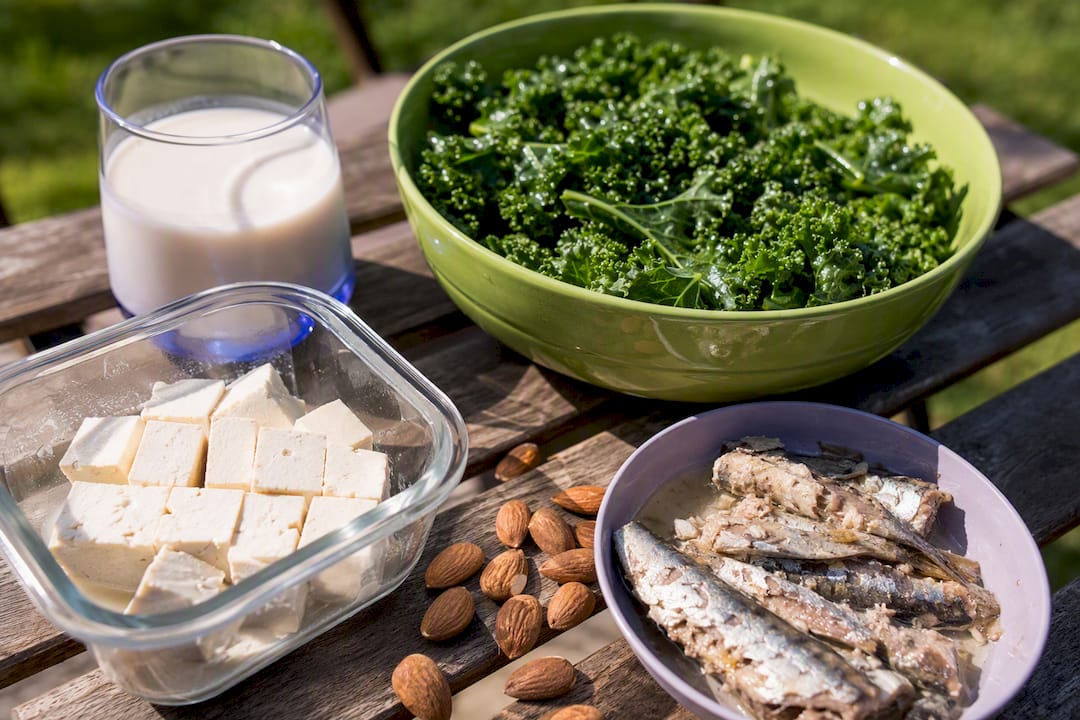
If you take one thing from this guide, make it this: your bones respond directly to what you eat, how much vitamin D you get, and whether you load them with movement. Most adults need 1,000 to 1,200 mg of calcium daily, paired with 600 to 800 IU of vitamin D, plus 150 minutes a week of moderate aerobic activity and strength training twice weekly. Skip any one of those three, and the other two work harder than they should.
You do not need a nutritionist’s degree to hit these numbers. You need a short list of reliable foods, a basic understanding of what blocks or boosts absorption, and a plan for the days when food alone falls short.
Eat calcium-rich foods at most meals, not just at breakfast
Get vitamin D from fortified foods, fatty fish, or sensible sun exposure
Add bone-loading exercise on a regular schedule
Reach for a supplement only when your diet leaves a real gap
Fracture Club built this guide from the same place we build everything else: helping people recover stronger, with real information and gear that actually works for the body you have right now.
Key Takeaways
Bone strength depends on hitting your calcium RDA, pairing it with adequate vitamin D, and loading your skeleton through regular weight-bearing exercise.
Point | Details |
Know your number | Most adults need 1,000 mg of calcium daily; women 51+ and men 71+ need 1,200 mg. |
Vitamin D is not optional | Get 600 IU daily through age 70, 800 IU after, to actually absorb the calcium you eat. |
Split large doses | Take no more than 500 to 600 mg of calcium at once, whether from food or supplements. |
Choose foods over pills | Canned fish with bones, calcium-set tofu, and fortified plant milk close most gaps without supplements. |
Move to build bone | Combine 150 minutes of weekly aerobic activity with strength training twice a week. |
Table of Contents
Calcium Rich Diet Bone Strength Guide: How Much You Actually Need
The Best Calcium-Rich Foods, Organized So You Can Actually Use Them
How to Get More Calcium Into Your Body, Not Just Onto Your Plate
Calcium Needs Shift for Different Groups. Here’s What Changes.
How Fracture Club Supports Your Bone Health Beyond the Plate
What the Research Actually Supports, and What Gets Overstated
Calcium Rich Diet Bone Strength Guide: How Much You Actually Need
The RDA is not one number. It shifts by age and sex because bone remodeling slows and calcium absorption drops as you get older, so the Office of Dietary Supplements sets higher targets for the groups most at risk of bone loss.
Here is the breakdown that matters for adults:
Group | Daily Calcium RDA |
Adults 19–50 | 1,000 mg |
Men 51–70 | 1,000 mg |
Women 51+ | 1,200 mg |
Men 71+ | 1,200 mg |
Women hit the higher target a full 20 years before men do, largely because of the drop in estrogen after menopause, which accelerates bone loss.
There is also a ceiling. The tolerable upper intake level sits at a limit above which there are increased risks such as kidney stones and interference with iron and zinc absorption. More is not automatically better here.
Counting toward your target is easier once you know a few benchmarks:
An 8-ounce glass of milk: roughly 300 mg
A cup of plain yogurt: roughly 300 to 450 mg
An ounce of hard cheese: roughly 200 mg
A half-cup of calcium-set tofu: roughly 250 to 400 mg
Three servings of dairy or dairy-equivalent foods gets most adults close to target on their own, which is why the NCBI’s review of bone-health lifestyle strategies points to a mixed diet of dairy, fortified foods, fish, and soy as a realistic path to meeting the RDA without supplements.
The Best Calcium-Rich Foods, Organized So You Can Actually Use Them
Knowing the target number matters less than knowing what to put on your plate. Here is a practical rundown of where the calcium actually is, organized by category so you can build meals around what you already like to eat.
Dairy and low-fat choices
Dairy remains the most calcium-dense, easiest-to-track category in the American diet. An 8-ounce glass of milk (whole, 2%, or skim, it barely matters for calcium content) delivers around 300 mg. Plain Greek yogurt often runs higher, sometimes 300 to 450 mg per cup, and it doubles as a protein source that supports muscle strength around your joints. Low-fat cottage cheese and part-skim mozzarella are solid mid-range options if you are managing saturated fat intake.
Pro Tip: Buy plain yogurt and add your own fruit or honey. Flavored yogurts often carry less calcium per ounce because the fruit filling displaces some of the dairy base.
Canned fish with bones
Canned sardines and canned salmon (the kind packed with the soft bones still in) are some of the most underused calcium sources in the American pantry. A 3-ounce serving of canned salmon with bones provides roughly 180 mg of calcium, and sardines run comparably high. The calcium comes from the bones themselves, softened during canning, so check the label to confirm bones are included before you count on a can for your calcium math. Mash a can of sardines into a salad, or flake canned salmon over crackers for a genuinely fast, high-calcium snack.
Calcium-set tofu and fortified plant milks
Not all tofu is created equal for calcium purposes. Tofu made with calcium sulfate (check the ingredient list) can deliver 250 to 400 mg per half cup, while tofu made with a different coagulant might offer very little. Fortified plant milks vary just as widely: soy, almond, and oat milks fortified for calcium typically land between 350 and 450 mg per 8-ounce serving, but unfortified versions can carry almost none. Reading the nutrition facts panel, specifically the calcium line, is the only reliable way to know what you are actually getting.
Greens: pick the low-oxalate ones
This is where a lot of well-meaning eaters get tripped up. Spinach looks like a calcium powerhouse on paper, but its high oxalate content binds much of that calcium before your body can absorb it. Kale, collard greens, and bok choy carry far less oxalate and deliver calcium your body can actually use. If you love spinach, keep eating it for its other nutrients, just don’t count on it as your primary calcium source.
Legumes, nuts, seeds, and dried fruit
White beans, chickpeas, and almonds all contribute modest but real calcium, typically 60 to 120 mg per serving. Sesame seeds and tahini punch above their weight. And here is a fact most bone-health articles skip entirely: prunes have shown up in randomized trials as a food that may actually slow bone loss, particularly in postmenopausal women, when eaten daily over several months. A handful of dried figs or prunes as an afternoon snack is a small, evidence-backed habit worth building.
How to Get More Calcium Into Your Body, Not Just Onto Your Plate
Eating calcium-rich foods is half the equation. Absorbing that calcium is the other half, and it is the part most people never think about.
Vitamin D is the biggest lever here. Your gut needs vitamin D to pull calcium across the intestinal wall efficiently, and adults 19 to 70 need 600 IU (15 mcg) daily, rising to 800 IU (20 mcg) after age 70. Fortified milk, fatty fish like salmon and mackerel, egg yolks, and about 10 to 15 minutes of midday sun on bare skin a few times a week all contribute. If you spend most of your day indoors, live somewhere with limited winter sun, or have a fracture keeping you off your feet and away from outdoor activity, ask your doctor about testing your vitamin D level rather than guessing.
Dose splitting matters more than most people realize. Your body absorbs calcium best in amounts of 500 to 600 mg or less at a time, so a single 1,200 mg dose at dinner is far less efficient than 600 mg at breakfast and 600 mg at dinner. This applies whether the calcium comes from food or a supplement.
A few things work against you at the absorption level:
High-oxalate foods (spinach, rhubarb, beet greens) bind calcium in the same meal
Excess sodium increases how much calcium your kidneys excrete
Some polyphenol-rich teas and coffee, in large quantities, modestly reduce absorption
Certain medications, including some steroids and proton pump inhibitors, interfere with calcium uptake over time
None of these require dramatic changes. Just don’t build your highest-calcium meal of the day around a spinach salad and a salt-heavy dressing, and if you take a long-term prescription medication, mention your calcium intake at your next appointment.
Do You Need a Calcium Supplement? A Practical Decision Rule
Food first. That is not a slogan, it is the actual recommendation from the Office of Dietary Supplements, which frames supplements as a way to fill a documented gap, not a default add-on. If you are hitting your RDA through dairy, fortified foods, fish, and legumes, a supplement adds nothing but expense and a small kidney-stone risk.
Supplements make sense when your diet has a real structural gap: you are dairy-free without reliably fortified substitutes, you have a diagnosed deficiency, or you are managing osteoporosis under a doctor’s care and need to close a specific number.
If you do need one, the form matters:
Calcium carbonate is the most common and cheapest option, but it needs stomach acid to dissolve properly, so take it with food
Calcium citrate absorbs well with or without food, making it the better choice for people with lower stomach acid, including many older adults and anyone on long-term acid-reducing medication
Whatever form you choose, keep single doses at 500 to 600 mg or under for the same absorption reasons that apply to food, and only combine calcium with vitamin D in one pill if you actually need both at the doses provided. Excess calcium intake, from food and supplements combined, has been linked to a higher risk of kidney stones in susceptible people, so this is a conversation worth having with a clinician rather than a decision made from a supplement aisle. Our supplement checklist walks through the safety questions worth asking before you start.
Sample Daily Menus That Actually Hit Your Calcium Target
Theory is easy. Getting 1,000 to 1,200 mg into an actual day of eating is where most people stall out. Here are three realistic menus, each landing at or near target.
1. Omnivore day (roughly 1,150 mg) Breakfast: 8 oz milk with cereal (300 mg). Lunch: canned salmon salad with bones, on whole grain bread (180 mg), plus a side of kale (100 mg). Dinner: grilled chicken with a cup of cooked white beans (120 mg) and a small block of calcium-set tofu stir-fried with bok choy (350 mg). Snack: a handful of almonds (80 mg) and two dried figs (20 mg).
2. Vegetarian day (roughly 1,100 mg) Breakfast: plain Greek yogurt with berries (400 mg). Lunch: grilled cheese on whole grain bread with a cup of fortified orange juice (400 mg total between cheese and juice). Dinner: chickpea and kale curry (150 mg) over rice, with a side of steamed collard greens (100 mg). Snack: a fortified granola bar (50 mg).
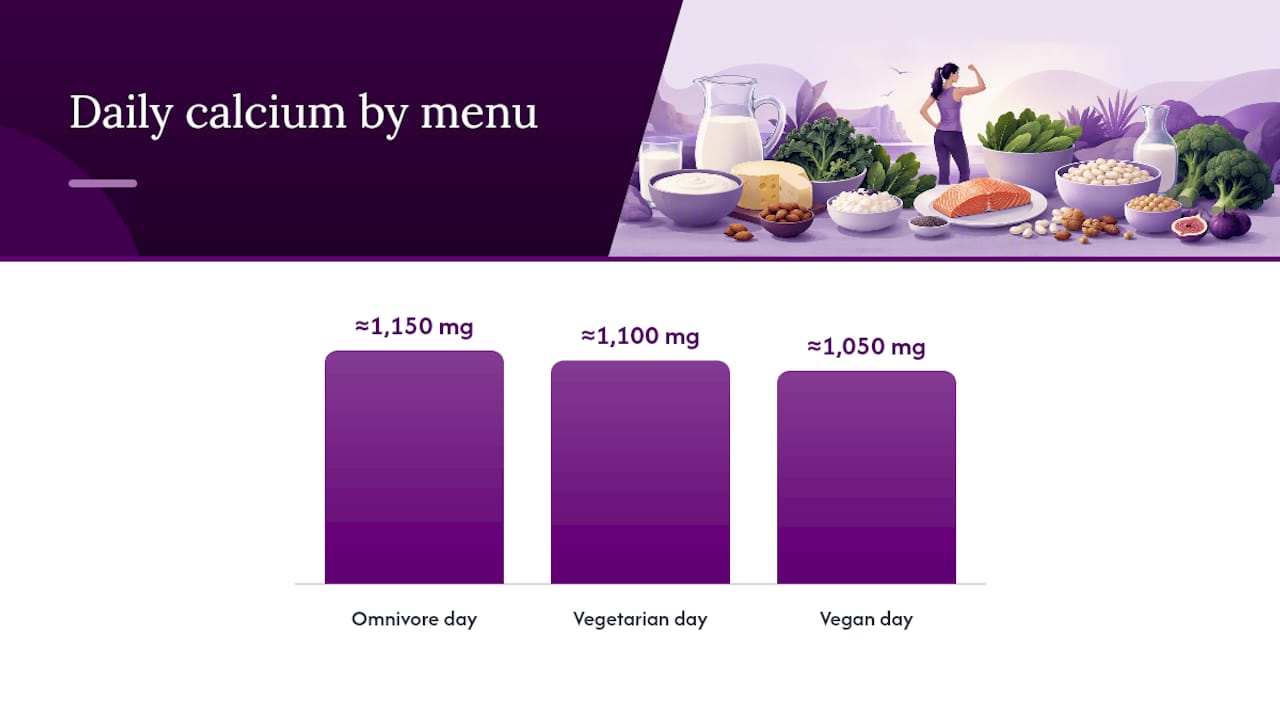
3. Vegan day (roughly 1,050 mg) Breakfast: fortified soy or oat milk with fortified cereal (450 mg combined). Lunch: calcium-set tofu stir-fry with bok choy and sesame seeds (400 mg). Dinner: white bean and collard greens stew (150 mg) with tahini drizzle (50 mg). Snack: two dried prunes and a small handful of almonds.
If any of these still leaves you short, a few fast swaps close the gap without a full menu overhaul:
Swap regular almond milk for a calcium-fortified version, an easy 350 to 450 mg gained for free
Add a can of sardines or salmon to a salad instead of grilled chicken, picking up 180 mg
Choose calcium-set tofu over the standard variety at the grocery store, a difference that can mean 300 mg or more per serving
Trade an afternoon coffee for a glass of fortified plant milk
None of these menus require special shopping trips or unusual ingredients. They lean on what is already sitting in a typical American grocery store.
Exercise That Works Alongside Your Diet
Calcium builds the raw material. Exercise tells your body where to put it. Weight-bearing and resistance activities create mechanical stress that signals bone tissue to remodel toward greater density, which is why diet alone, without movement, leaves real strength gains on the table.
The NIAMS guidance is specific: aim for 150 minutes of moderate aerobic activity weekly (walking, dancing, hiking) plus muscle-strengthening work involving major muscle groups at least twice a week. Bone-loading activities that count include:
Brisk walking or hiking
Stair climbing
Weight training with dumbbells, resistance bands, or bodyweight
Dancing or low-impact aerobics
If you are recovering from a fracture or you are an older adult managing balance concerns, increase intensity gradually and add balance work, like standing on one foot or tai chi, to reduce fall risk. Our weight-bearing exercise routine guide breaks this down by starting point.
A few habits work directly against everything above: smoking accelerates bone loss, heavy alcohol use interferes with calcium balance, and being significantly underweight reduces the mechanical load your skeleton needs to stay dense. None of these are complicated fixes, but they are worth naming honestly.

Calcium Needs Shift for Different Groups. Here’s What Changes.
A blanket recommendation misses the people who need the most attention. A few groups deserve specific adjustments.
Older adults and postmenopausal women need the higher 1,200 mg target and should treat vitamin D as equally important, since skin becomes less efficient at synthesizing it with age. Our daily habits guide for reducing fracture risk after 50 covers this territory in more depth.
Vegans and dairy-free eaters need to be deliberate. Fortified plant milks, calcium-set tofu, tahini, and fortified cereals should appear daily, not occasionally, and reading the calcium line on nutrition labels becomes a non-negotiable habit rather than a nice-to-have.
Pregnant and breastfeeding people generally follow standard adult RDAs, since the body increases calcium absorption efficiency during pregnancy rather than requiring more intake, but vitamin D coordination with an OB or midwife matters. Our partner resource on vitamin D for breastfeeding mothers and babies covers this specific overlap well.
People recovering from a fracture have a narrower window where nutrition really counts. The first 6 to 12 weeks after a break are when your body is laying down new bone tissue fastest, which makes consistent calcium and vitamin D intake, plus whatever weight-bearing activity your physical therapist clears, more important than usual. Coordinate any supplement decisions with your rehab team rather than freelancing it.
Where the Real Risk Lives: Getting Too Much, Not Too Little
Most conversations about calcium focus on deficiency. Fewer talk about the opposite problem, and it is worth taking seriously.
The tolerable upper intake level runs around 2,000 to 2,500 mg per day depending on age group, and consistently exceeding it raises the risk of kidney stones and can interfere with iron and zinc absorption. The catch is that overshooting is easier than it sounds once you add fortified foods and a supplement on top of an already solid diet.
Audit your real total before assuming you need more:
Add up food sources for a typical day, including fortified cereals, plant milks, and juices, not just obvious dairy
Check any multivitamin or separate calcium supplement label for its milligram content
Remember that “fortified” products stack quickly. Two servings of fortified cereal plus a glass of fortified juice plus a supplement can push past 2,000 mg without a single dairy product involved
If you have a history of kidney stones, take medications that interact with calcium, or you are unsure whether you are getting enough despite a reasonable diet, a bone density scan or a blood calcium and vitamin D panel gives you real numbers instead of guesswork. That conversation belongs with your doctor.
How Fracture Club Supports Your Bone Health Beyond the Plate
Nutrition is one piece of recovery. What you wear during that recovery is another, and it is the piece we built our company around. When you are managing a cast, a brace, or limited mobility after a fracture, getting dressed shouldn’t be another daily obstacle on top of everything else.
Adaptive shirts and pants with magnetic or zipped closures make dressing possible without help, even with a cast on
A portion of proceeds supports the Bone Health & Osteoporosis Foundation, connecting your purchase to broader bone-health research and advocacy
Our supplements checklist and aging-adults bone health guide extend this article’s guidance for readers who want more depth
We built Fracture Club because recovery is about more than the injury itself. It’s about feeling like yourself again while your body does the slow work of healing, one meal, one workout, one morning of getting dressed without a fight, at a time.
If you’re navigating a fracture right now, our adaptive recovery pants and easy-on sweatshirts were designed specifically for this stage, when independence matters just as much as nutrition does. Reach out through our inquiry page if you need guidance choosing the right fit for a cast or brace.
What the Research Actually Supports, and What Gets Overstated
The conventional advice on bone health tends to lean too hard on supplements and not hard enough on the boring, reliable combination of food, vitamin D, and load-bearing movement. A calcium pill feels like progress. A daily walk and a can of sardines feel too ordinary to matter, but the evidence points the other way.
What gets underrated is absorption strategy. Most people who “eat enough calcium” on paper are still leaking value by pairing it with high-oxalate greens, taking it in one giant dose, or skipping vitamin D entirely. Fixing that costs nothing and takes less effort than starting a new supplement.
If you take one action from this guide, make it this: audit a single day of your actual eating against the RDA before you assume you need a pill. Most gaps close with a glass of fortified milk and a can of salmon, not a trip to the pharmacy.
Primary Sources Behind This Guide
This guide draws on established clinical and government nutrition resources rather than fitness-blog guesswork.
NIH Office of Dietary Supplements: Calcium fact sheet for RDAs, upper limits, and supplement guidance
NIAMS exercise and bone health guidance for activity recommendations
Harvard Health’s guide to calcium-rich foods for absorption and food-source detail
NCBI Bookshelf review of lifestyle approaches to bone health for dietary pattern context
Frequently Asked Questions
How much calcium do I need every day for strong bones? Most adults ages 19 to 50 need 1,000 mg daily. That number rises to 1,200 mg for women 51 and older and men 71 and older, reflecting the faster bone loss that comes with age and, for women, the drop in estrogen after menopause.
What foods have the most calcium? Canned salmon and sardines with bones, calcium-set tofu, fortified plant milks, dairy products, and low-oxalate greens like kale and collards are the most reliable sources. A single 3-ounce serving of canned salmon with bones delivers roughly 180 mg on its own.
Do I need a calcium supplement, or can food cover it? Food should come first. Supplements make sense mainly when you have a documented gap, a restrictive diet without fortified substitutes, or a diagnosed condition like osteoporosis that your doctor is actively managing.
Can I get too much calcium? Yes. Going consistently over the tolerable upper limit, roughly 2,000 to 2,500 mg depending on age, raises the risk of kidney stones and can interfere with iron and zinc absorption. This usually happens when fortified foods and supplements stack on top of an already adequate diet.
Does spinach count as a good calcium source? Not really. Spinach is high in oxalates, which bind much of its calcium before your body can absorb it. Kale, collard greens, and bok choy are better choices for calcium purposes, even though spinach still offers other nutrients.
What exercise helps calcium actually build bone strength? Weight-bearing and resistance activities, walking, stair climbing, and strength training, signal your body to remodel bone tissue toward greater density. Aim for 150 minutes of moderate aerobic activity weekly plus muscle-strengthening work at least twice a week.
This article is general information, not a substitute for advice from a qualified doctor. Consult a qualified healthcare professional about your own circumstances before acting on anything here.
Sources
Recommended
Comments