
Why Diet Affects Bone Fracture Recovery: 2026 Guide


Diet is the primary driver of bone fracture recovery because it supplies the protein, calcium, vitamin D, and micronutrients your body needs to rebuild damaged bone tissue. Without these building blocks, even the best surgical fixation or casting cannot produce strong, well-mineralized new bone. Nutrition is often overlooked in orthopedic care despite its proven role in cellular metabolism and callus formation. Understanding why diet affects bone fracture recovery puts one of the most powerful healing tools directly in your hands.
Why diet affects bone fracture recovery at the cellular level
Bone healing is not a passive process. It follows a tightly regulated biological sequence: inflammation, soft callus formation, hard callus mineralization, and finally bone remodeling. Fracture healing requires a coordinated metabolic environment where nutrient availability, immune response, and cell proliferation must be perfectly timed. Miss the nutritional window for any phase, and the entire sequence slows down.
Think of it this way: your body is essentially running a construction project inside your bone. Protein lays the scaffolding, calcium and phosphorus pour the concrete, and vitamins D, C, and K2 act as the project managers making sure everything sets correctly. If any one of these inputs runs short, the project stalls. This is the core reason why the diet impact on bone healing is not optional. It is structural.

What nutrients does your body need most after a fracture?
Protein: the scaffold builder
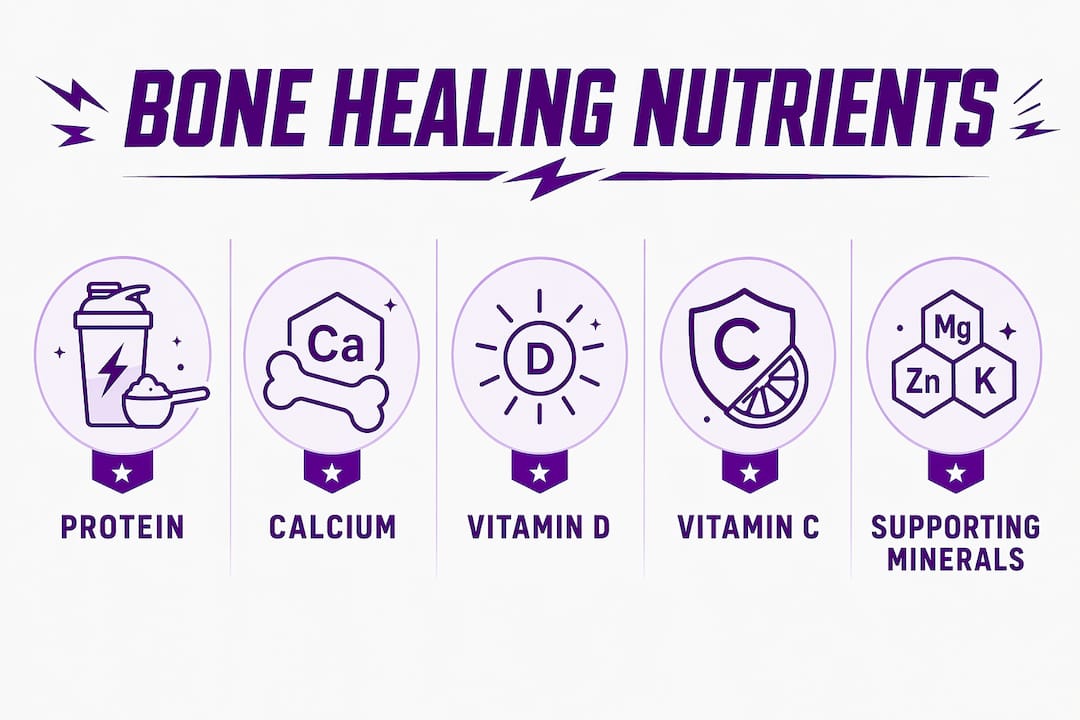
Protein is the most critical macronutrient for fracture repair. Your body uses it to synthesize collagen, which forms the organic scaffold that calcium and phosphorus then mineralize into hard bone. Patients recovering from fractures should consume 1.2 to 1.5 grams of protein per kilogram of body weight daily. For a 70 kg person, that means 84 to 105 grams of protein every day, roughly double the standard adult recommendation. Good sources include Greek yogurt, eggs, chicken, canned salmon, lentils, and cottage cheese.
Calcium and vitamin D: the mineralization pair
Calcium provides the mineral density that makes healed bone strong enough to bear weight. But calcium cannot do its job alone. Calcium intake of about 1,000 mg per day requires adequate vitamin D for effective absorption and bone mineralization. Vitamin D deficiency renders even a high-calcium diet largely ineffective. Dairy products, fortified plant milks, and canned sardines with bones are reliable calcium sources. Vitamin D comes from sunlight exposure, fatty fish like mackerel and salmon, and supplements when sun exposure is limited.
Vitamin C: the collagen stabilizer
Vitamin C is a cofactor for the enzymes that cross-link collagen fibers, giving the scaffold its mechanical strength. Without adequate protein and vitamin C, the body cannot effectively mineralize new bone even when calcium intake is sufficient. This is a critical point many patients miss. You can take all the calcium supplements you want, but if your collagen matrix is weak, mineralization has nothing solid to attach to. Citrus fruits, bell peppers, kiwi, and broccoli are among the richest sources.
Supporting minerals and vitamins
Magnesium: Supports bone density through enzymatic function; supplementation is recommended only when a deficiency is confirmed, not routinely.
Zinc: Activates enzymes involved in bone matrix synthesis and immune defense during healing.
Vitamin K2: Directs calcium into bone tissue rather than soft tissue, working alongside vitamin D.
B vitamins: Support cellular energy metabolism during the high-demand repair phase.
Omega-3 fatty acids: Reduce harmful chronic inflammation through dietary control alongside vitamin E and polyphenols, protecting the healing environment.
Pro Tip: If you are unsure whether you are getting enough vitamin D, ask your doctor for a 25-hydroxyvitamin D blood test. Levels below 30 ng/mL are common in fracture patients and are easy to correct with a targeted supplement.
How poor diet and chronic conditions slow fracture healing
Poor nutrition does not just slow healing. It can derail it entirely. Consider these four major risk factors:
Malnutrition. Malnutrition affects up to 81.2% of elderly hip fracture patients and is linked to more complications, longer hospital stays, and higher mortality. This statistic reveals how common nutritional neglect is in fracture care, and how much room there is to improve outcomes simply by addressing diet.
Diabetes. Diabetes impairs bone healing via accumulated advanced glycation end-products (AGEs) that reduce collagen cross-linking and make bones brittle, even when bone mineral density appears normal. High blood sugar generates AGEs that chemically degrade the collagen scaffold your body is trying to build. Managing glycemic control is therefore a direct nutritional strategy for better healing quality.
NSAID overuse. Prolonged NSAID use during early healing phases can delay fracture repair by impairing the inflammatory cascade necessary to initiate bone formation. Inflammation in the first days after a fracture is not the enemy. It is the trigger that recruits the cells needed to start rebuilding. Talk to your doctor before relying on ibuprofen or naproxen for extended pain management.
Dietary substances that block absorption. Excess sodium pulls calcium out through the kidneys. Alcohol disrupts osteoblast activity and vitamin D metabolism. Nicotine constricts blood vessels that supply nutrients to the fracture site. Excessive sugar promotes AGE formation. These are the foods to avoid after a fracture, not because they are generally unhealthy, but because they directly interfere with the specific biological processes your bone depends on right now.
“What you put on your plate is not separate from what happens at the fracture site. Every meal either supports or undermines the repair work your body is doing around the clock.”
Practical dietary strategies to speed up bone healing
The goal is not a perfect diet. The goal is a diet that consistently delivers the nutrients your healing bone needs, every single day. Here is how to build that.
Nutrient | Daily target | Best food sources |
Protein | 1.2–1.5 g/kg body weight | Eggs, Greek yogurt, chicken, lentils, canned salmon |
Calcium | ~1,000 mg | Dairy, fortified plant milk, sardines, kale |
Vitamin D | 600–800 IU (higher if deficient) | Fatty fish, fortified foods, sunlight, supplements |
Vitamin C | 75–90 mg (higher during healing) | Bell peppers, citrus, kiwi, broccoli |
Omega-3s | 2–3 servings of fatty fish per week | Salmon, mackerel, walnuts, flaxseed |
Distribute your protein intake across three meals rather than loading it all into one sitting. Your body can only synthesize so much collagen at a time, so spacing protein throughout the day is more effective than a single high-protein dinner. Pair calcium-rich foods with vitamin D sources at the same meal whenever possible. A bowl of fortified yogurt with a side of canned salmon hits both targets simultaneously.
The Mediterranean diet pattern aligns well with these goals. It emphasizes olive oil, fatty fish, legumes, leafy greens, and fresh fruit, all of which provide anti-inflammatory polyphenols, omega-3s, and the micronutrients listed above. You do not need to follow it rigidly, but using it as a general template gives you a practical framework.
Collagen peptide supplements have shown promise in supporting connective tissue repair, and some patients find them a convenient way to boost protein intake. Check with your doctor or a registered dietitian before adding supplements, especially if you take medications that affect calcium or vitamin D metabolism. For more on post-fracture nutrition, Fracture-club has a dedicated resource that goes deeper on specific supplement strategies.
Pro Tip: Hydration matters more than most people realize during fracture recovery. Nutrients travel to the fracture site through your bloodstream. Aim for at least 8 cups of water daily to keep that delivery system working efficiently.
How diet influences long-term bone strength and future fracture risk
Healing a fracture is the short-term goal. Keeping your bones strong enough to avoid the next one is the long-term mission. The bone remodeling phase, where your body refines and strengthens the repaired area, continues for months after the fracture appears healed on X-ray. Sustained nutritional support during this phase determines the final mechanical quality of the bone.
Key habits that protect bone strength over the long term include:
Consistent vitamin K2 and D intake to maintain calcium utilization and bone density. Vitamin K2 activates osteocalcin, a protein that binds calcium into the bone matrix. Without it, calcium circulates without being properly deposited.
Gut health support. A healthy gut microbiome improves mineral absorption, including calcium and magnesium. Fermented foods like kefir, yogurt, and kimchi support the microbiome and indirectly support bone density.
Weight-bearing exercise alongside diet. Mechanical loading signals bone cells to maintain density. Diet provides the raw materials; exercise tells the body where to put them.
Smoking cessation. Nicotine reduces blood flow to bone and suppresses osteoblast activity. No dietary strategy fully compensates for active smoking during recovery.
Reducing processed food and sodium. High sodium diets increase urinary calcium loss. Swapping processed snacks for whole foods is one of the simplest ways to protect your calcium balance.
For a deeper look at long-term bone health and how dietary habits reduce osteoporosis risk, Fracture-club has a full guide worth reading once you are through the acute recovery phase.
Key takeaways
Bone fracture recovery depends directly on protein, calcium, vitamin D, and vitamin C working together to build and mineralize the collagen scaffold that becomes new bone.
Point | Details |
Protein is non-negotiable | Aim for 1.2–1.5 g/kg body weight daily to support collagen scaffold formation. |
Calcium needs vitamin D | 1,000 mg of calcium daily is only effective when vitamin D levels are adequate for absorption. |
Chronic conditions raise the stakes | Diabetes and malnutrition significantly impair healing quality and must be actively managed. |
Avoid healing blockers | Excess sodium, alcohol, nicotine, and NSAIDs directly interfere with bone repair processes. |
Long-term habits matter | Sustained intake of vitamins K2 and D, plus gut health support, protects bone density beyond healing. |
What I have learned watching nutrition get sidelined in fracture care
Most fracture patients leave the hospital with instructions about weight-bearing restrictions and follow-up appointments. Almost none leave with a nutrition plan. I have seen this pattern repeatedly, and it frustrates me because the evidence is clear. Nutrition is not a soft add-on to fracture care. It is a core mechanism of repair.
The patients who struggle most are often those managing diabetes or those who were already eating poorly before the injury. Their bones are trying to rebuild in a metabolic environment that is actively working against them. AGEs are degrading the collagen they are trying to form. Low protein intake means the scaffold never gets built properly. And yet the clinical conversation stays focused almost entirely on hardware and immobilization.
What I want you to take away from this is that your diet is one of the few things you can control right now. You cannot speed up the biological clock, but you can make sure it has everything it needs to run on time. Talk to your doctor or a registered dietitian about your specific nutritional needs. Ask about your vitamin D levels. Think about your protein intake at every meal. These are not small adjustments. They are the difference between a fracture that heals well and one that does not.
— Fracture
Recovery wear that works as hard as your diet does
Eating well is one part of healing smart. The other part is making sure your daily routine does not fight against your recovery.
At Fracture-club, we designed our adaptive recovery pants with side magnetic zippers specifically for people dealing with casts and braces. Getting dressed should not be a painful ordeal that drains your energy before the day even starts. Our upper limb recovery sweatshirt follows the same principle: comfort and function without compromising on how you feel. A portion of every purchase supports the Bone Health & Osteoporosis Foundation, because recovery is bigger than any one person.
FAQ
What foods speed up bone fracture healing?
Foods highest in protein, calcium, vitamin C, and vitamin D support the fastest healing. Prioritize Greek yogurt, eggs, salmon, leafy greens, citrus fruits, and fortified dairy or plant milks.
Can vitamin D deficiency slow fracture recovery?
Yes. Vitamin D is required for calcium absorption and bone mineralization, so a deficiency directly reduces the effectiveness of dietary calcium and slows the mineralization of new bone tissue.
What foods should you avoid after a fracture?
Avoid excess alcohol, high-sodium processed foods, and nicotine, as these impair calcium absorption, reduce blood flow to the fracture site, and disrupt bone cell activity during healing.
Does protein really matter for bone healing?
Protein is the structural foundation of the collagen scaffold that bone minerals attach to. Without sufficient protein, calcium cannot mineralize effectively, regardless of how much calcium you consume.
How long should I follow a bone-healing diet?
The acute healing phase lasts six to eight weeks, but bone remodeling continues for months. Sustained intake of calcium, vitamin D, and protein through whole foods supports long-term bone strength and reduces future fracture risk.
Recommended
Comments