
Caregivers: 3 Clothing Features for Swelling After Injury

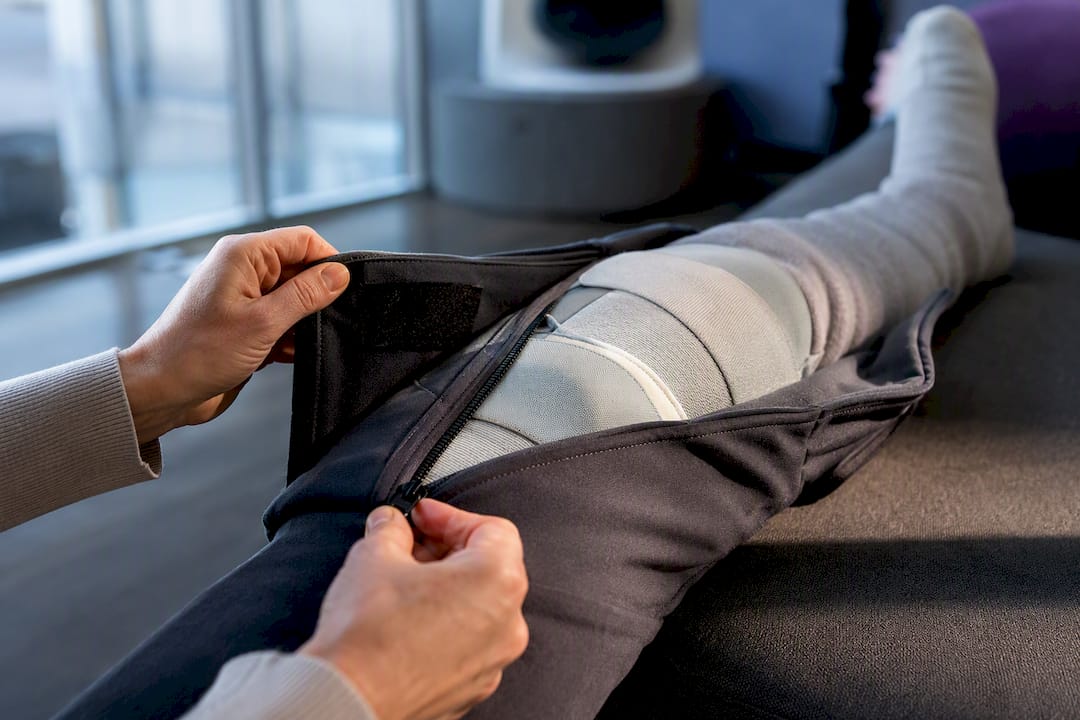
Adaptive recovery clothing with side openings, magnetic or Velcro closures, and roomy cuts is the easiest way to dress a swollen or casted limb. The three features that matter most: side zips or fasteners that skip the struggle of pulling fabric over a bulky cast, magnetic or Velcro closures you can manage with one hand, and a generous fit that leaves room for bandages and swelling. Some brands build their recovery wear around exactly these three things.
TL;DR:
Full-length zippers, magnetic fasteners, and roomy cuts are essential features for adaptive clothing to accommodate swelling and reduce dressing difficulty.
Clothing should be measured over the cast or dressing, with adjustable waistbands and ample room to handle fluctuating swelling throughout recovery stages.
Using side-zips or full-length openings simplifies dressing and undressing over casts, while safety checks of seams prevent skin irritation or circulation issues.
Nightwear should prioritize breathability, loose fit, and seam placement to reduce discomfort and accommodate swelling during sleep.
The best adaptive garments combine function with comfort, helping wearers feel normal and supported during the healing process.
Table of Contents
[Some brands focus on the belief that recovery clothing shouldn’t force you to choose between function and dignity. Side magnetic zippers and roomy cuts solve the practical problem of dressing over a cast, but the deeper goal is helping you feel like yourself again while your body heals. Research on adaptive clothing design backs this up directly: users treat looking and feeling “normal” as just as important as ease of access, not a secondary concern.](#some-brands-focus-on-the-belief-that-recovery-clothing-shouldnt-force-you-to-choose-between-function-and-dignity-side-magnetic-zippers-and-roomy-cuts-solve-the-practical-problem-of-dressing-over-a-cast-but-the-deeper-goal-is-helping-you-feel-like-yourself-again-while-your-body-heals-research-on-adaptive-clothing-designhttpsdoiorg1015240tul0082025-4-001-backs-this-up-directly-users-treat-looking-and-feeling-normal-as-just-as-important-as-ease-of-access-not-a-secondary-concern)
How Fracture-club Can Help You Dress Comfortably During Recovery
What to Look for in Clothing for Swelling After Injury
Swelling doesn’t wait for you to figure out what to wear. Your limb might be twice its normal size one day and half that the next, so the clothing you choose has to work with a moving target, not against it.
Side-fastening or full-length zips are the single biggest upgrade over standard clothing. Instead of stretching a pant leg or sleeve over a cast, you open a zipper that runs the length of the limb and lay the fabric around it. Amplife’s zip-on pant designs show how a simple full-length zipper eliminates the tug-of-war that standard pants create.
Magnetic and Velcro closures solve a different problem: hand strength and dexterity. If you’re managing a wrist brace or a hand that’s still tender, fiddling with buttons is miserable. Magnets snap into place with almost no pressure, and Velcro adjusts to whatever size your swelling decides on that day. Focus-group research on adaptive clothing design found that patients consistently preferred loose-fitting garments with high-quality Velcro fasteners over traditional closures, and rated adjustability as a top priority.
Roomy cuts and removable panels round out the list. Look for adjustable waistbands, drawstrings instead of fixed elastic, and side panels that can open fully for access. A separate user-testing study on adaptive clothing prototypes reported that participants overwhelmingly favored side fasteners, rounded seam edges, and wider strips of fabric around closures, all details that reduce rubbing against tender skin.
Fabric matters just as much as construction. Look for:
Soft, breathable cotton blends that won’t trap heat under a cast
Low-friction interior seams that won’t chafe swollen skin
Flat or covered zipper flanges so metal teeth never sit against your skin
A “garage” or fabric guard where zippers stop, protecting skin from pinching
Pro Tip: Run your finger along the inside of any zipper or magnetic closure before buying. If you can feel hard edges or exposed metal, that seam will bother you within a day of casted or swollen skin rubbing against it.
Clothing Options by Body Area: Arms, Legs, and Torso
The right garment depends entirely on where the injury is. Here’s how to match clothing to the body part that needs it.
Upper limb injuries. Look for tops with wide sleeves, deep armholes, or shoulder-snap openings that let you thread a cast or brace through without twisting your shoulder. If you’re wearing a sling, a shoulder-opening top avoids the awkward reach-behind-the-back move that standard shirts demand. Fracture-club’s guidance on clothing for arm swelling covers sleeve width and shoulder access in more detail.
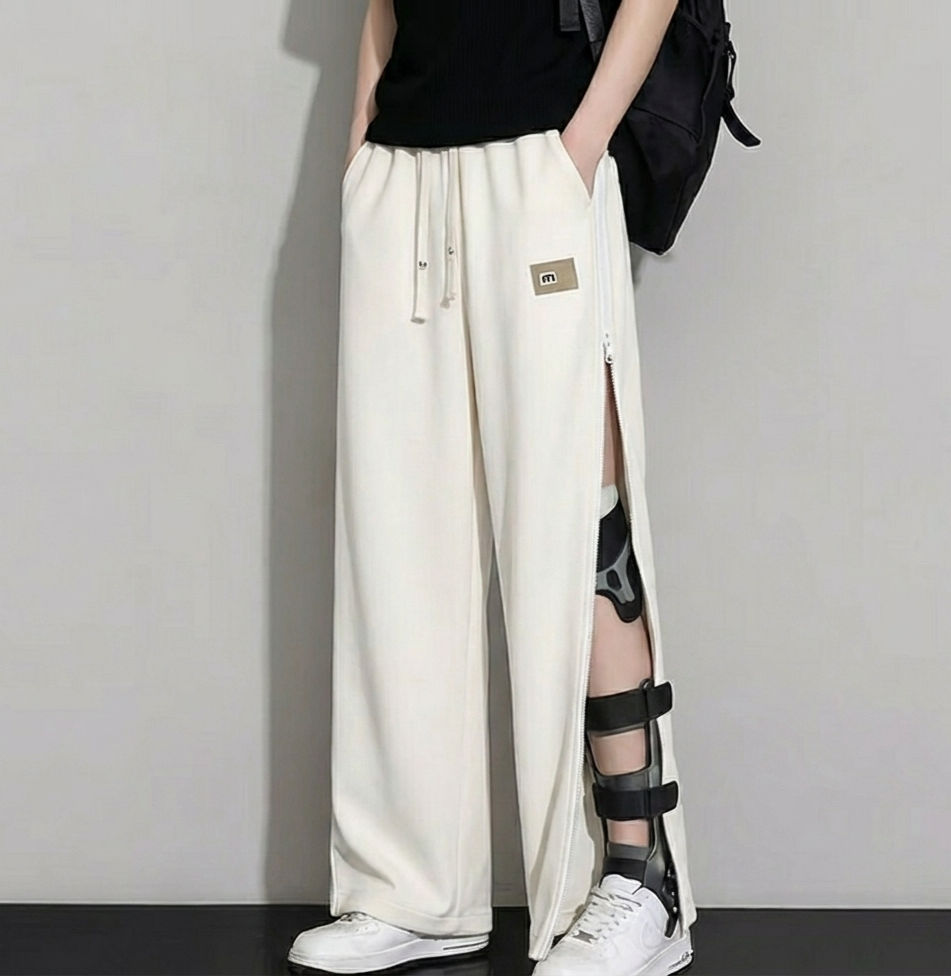
Lower limb injuries. Zip-open pants and shorts are the standard solution here, since they let you dress while sitting, standing, or lying flat without ever pulling fabric over the cast. Footless designs work well for below-knee casts, and a soft, adjustable waistband (not a stiff elastic band) keeps pressure off a swollen thigh or hip. Amplife’s zip-on shorts illustrate this approach well, and Fracture-club’s leg cast clothing guide walks through sizing specifics.
Torso and trunk injuries. After abdominal surgery or a trunk injury, front-open tops or one-piece designs with a full zip avoid the need to raise your arms overhead. Fracture-club’s post on clothing for post-op drains is worth a look if you’re also managing surgical drains alongside swelling.
Season matters too. Shorts and short sleeves make sense in warm weather or right after injury when swelling is at its worst, while layers with removable panels give you flexibility as temperatures or your recovery stage change.
How to Dress and Undress Someone Safely
The sequence you follow when dressing matters more than most people realize. Nationwide Children’s Hospital’s guidance on cast and splint care is simple but easy to forget in the moment: dress the injured limb first, undress it last.
When putting clothes on, guide the injured arm or leg into the sleeve or pant leg first, then bring the rest of the garment around the body.
When taking clothes off, remove the uninjured side first, then gently slide fabric away from the injured limb last.
If you’re using side zips or magnetic closures, open them fully before attempting to position the limb. Never try to slide a cast through a partially open seam.
Have the person sit or lie down with the injured limb supported on a pillow or rolled towel. This keeps the joint stable and reduces the twisting that causes pain.
For larger casts or braces, a second person makes the process faster and safer. One person supports the limb while the other manages fasteners.
Before you call it done, run a quick safety check: no seam or waistband should press directly on a cast edge, and fingers or toes should stay their normal color and warm to the touch after dressing. If they look pale, blue, or feel unusually cold, that’s a circulation issue worth calling your doctor about.
Pro Tip: Practice the sequence once with an old T-shirt before you actually need it for real dressing. Muscle memory matters when someone is in pain and impatient to get moving.
Sizing, Fit, and Care Tips for Casted or Swollen Limbs
Measuring for adaptive clothing isn’t like measuring for regular clothes. You’re sizing for a moving target, not a fixed body.
Measure over the cast or dressing itself, not the limb underneath, and add extra room since swelling often peaks in the first 48 hours before it starts to go down.
Prefer adjustable waistbands or drawstrings over fixed elastic. A waistband you can loosen on a bad swelling day and tighten later is worth far more than a “perfect” fit that only works once.
Fasten all Velcro closures before washing, and keep magnetic closures away from other metal hardware in the wash to avoid snagging or weakened magnets over time.
Wash adaptive garments on a gentle cycle and air dry when possible. Heat and aggressive tumbling wear down Velcro hooks and can loosen magnet pockets faster than normal wear.
If you’re using cold packs to manage early swelling, keep them off a non-waterproof cast directly. Nationwide Children’s Hospital notes that cold pack use in the first 24 to 48 hours helps reduce swelling before dressing, but the cast itself needs a barrier, like a thin towel, to stay dry.
Managing Clothing Through the Acute and Reduction Phases
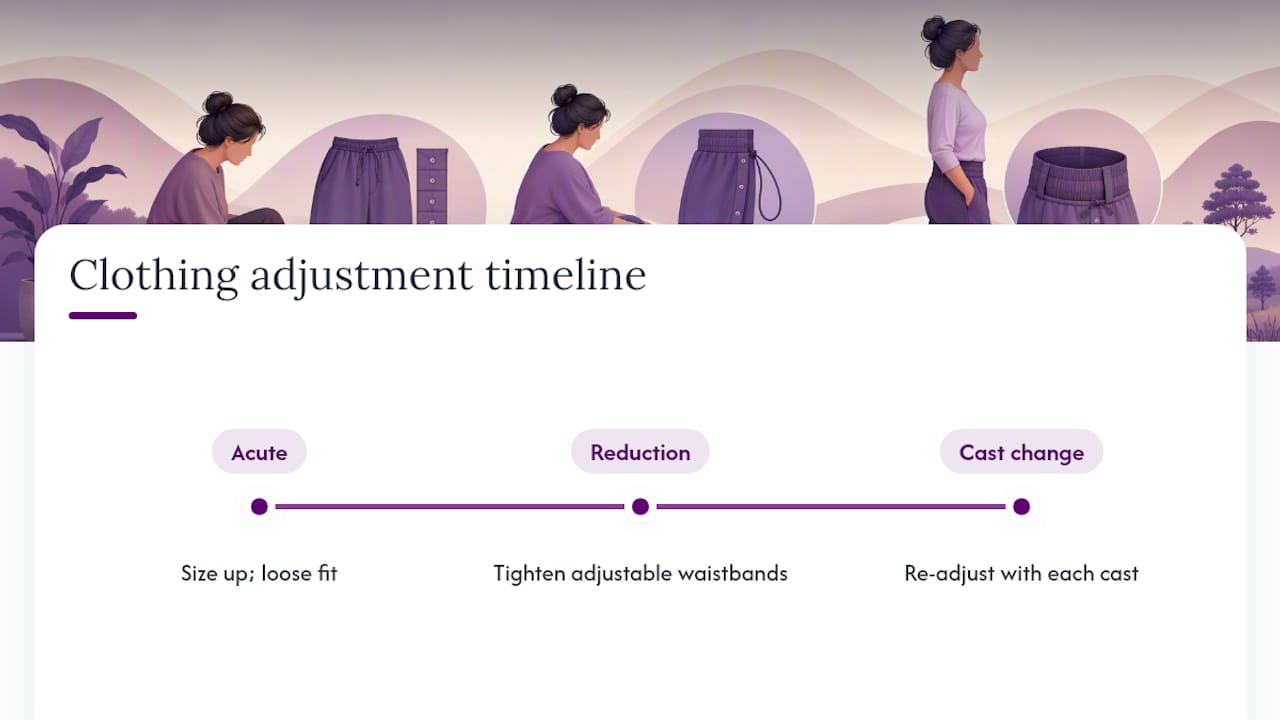
Swelling isn’t static, and neither should your clothing choices be. The first few days after an injury, often called the acute phase, is when swelling is at its worst. Your limb might look dramatically larger than it will a week later, so this is exactly the wrong time to buy anything fitted or final.
During this stage, size up. Choose the loosest adjustable option you can find, and lean on drawstrings or Velcro that can expand as needed. Many people make the mistake of buying clothing based on how their limb looks on day one, only to find everything too tight by day three when swelling peaks, or too loose by week two once it starts subsiding.
The reduction phase, when swelling gradually goes down, calls for the opposite adjustment. This is when adjustable waistbands earn their keep. Instead of buying a second wardrobe, you tighten the same drawstring or move the Velcro tab a notch closer. Garments built with a wide adjustment range, rather than a single fixed size, carry you through both stages without a second purchase.
If you’re recovering from a fracture that involves a cast change partway through treatment, expect your sizing needs to shift again each time the cast is adjusted. Building in room to loosen or tighten your clothing is far more practical than replacing it stage by stage.
Why Fit Fluctuates and How Adjustable Garments Solve It
Swelling rarely moves in a straight line. It can shift by the hour depending on how much you’ve been sitting, standing, or moving the injured area, which means the pant leg that fit perfectly at 9 a.m. might feel tight by dinner.
This is the core argument for adjustable garments over fixed-size clothing. A drawstring waistband, a wide-range Velcro closure, or a magnetic zipper with multiple catch points all let the same garment handle a range of swelling levels without needing to be replaced. Focus-group research on adaptive clothing prototypes found that removable sections and adjustable waistbands scored consistently high with participants managing casts, braces, and swelling together.
[
Rigid sizing charts don’t account for this reality well. A garment labeled “medium” based on standard body measurements may fit fine over an unswollen limb but pull tight the moment a cast or bandage is added. That’s why measuring over the dressing itself, and choosing a garment with real adjustment range built in, matters more than chasing an exact size label.
If you only buy one adaptive piece during recovery, make it something with at least two inches of built-in adjustment room. That margin is usually enough to cover the swing between morning and evening swelling without needing a second size.
Can You Wear Compression Clothing With Swelling and Injury?
This question comes up often, and the honest answer is: it depends entirely on what your doctor or physical therapist has told you for your specific injury. Compression garments apply pressure to reduce swelling, but that pressure has to be calibrated correctly for the injury, the stage of healing, and whether a cast or brace is already providing support.
Wearing anything with compressive intent directly over a fresh cast, brace, or unhealed fracture without medical guidance carries real risk. Too much pressure in the wrong place can restrict circulation, which is exactly what you’re trying to avoid during recovery. This is a decision to make with a medical professional, not a clothing guide.
What adaptive recovery clothing offers instead is compatibility, not compression. A roomy, adjustable garment can be worn comfortably alongside any compression item your provider has actually prescribed, without adding extra pressure or fighting against your treatment plan. The goal of adaptive wear is ease of dressing and comfortable coverage, leaving the actual swelling-reduction plan in the hands of your care team.
If your provider has recommended a specific compression approach, ask them directly whether your daily clothing needs any adjustment around it. That conversation matters more than any general rule a clothing article can give you.
What to Wear to Bed While Swelling and Recovering
Nighttime is when a lot of people give up on adaptive clothing and default to whatever’s loose in the drawer, and that’s usually a mistake. Regular pajamas often have the same tight cuffs, narrow leg openings, and fixed waistbands that cause problems during the day, just at a time when you’re less able to adjust them yourself.
Look for sleepwear with the same core features you’d want in daytime recovery wear: soft, breathable fabric, a wide or adjustable waistband, and side openings if you’re managing a leg or hip injury. Elevating a swollen limb overnight is common advice from care teams, and tight cuffs or hems can dig into skin exactly where you don’t want added pressure while you’re elevated for hours at a stretch.
Seams matter more at night than most people expect. You’re not adjusting your position consciously while asleep, so a seam pressing into a cast edge or a swollen ankle can cause real discomfort by morning without you ever waking up to fix it. Choosing sleepwear a size up, with fabric that moves with you rather than against you, prevents most of that overnight friction.
If you tend to run warm under a cast, breathable cotton blends beat synthetic fabrics for night wear specifically, since trapped heat under a cast is a common complaint that gets worse, not better, while you sleep.
Some brands focus on the belief that recovery clothing shouldn’t force you to choose between function and dignity. Side magnetic zippers and roomy cuts solve the practical problem of dressing over a cast, but the deeper goal is helping you feel like yourself again while your body heals. Research on adaptive clothing design backs this up directly: users treat looking and feeling “normal” as just as important as ease of access, not a secondary concern.
That’s why every design decision runs through both filters at once, function first, then how it feels to wear. Beyond the clothing itself, some brands lean on community, sharing recovery stories from people who’ve worn a cast or brace themselves, because healing is easier when you don’t feel alone in it. Some proceeds benefit the Bone Health & Osteoporosis Foundation, connecting individual recovery to a larger cause. Our approach to post-surgery dressing reflects the same philosophy: practical first, but never at the cost of how you feel wearing it.
— Fracture
How Fracture-club Can Help You Dress Comfortably During Recovery
Adaptive gear works best when it’s built specifically for the problem you’re solving, whether that’s a cast, a brace, or swelling that changes by the hour, as explained in this rider’s guide to adaptive cycling protection. Fracture-club’s Unisex Easy-On/Off Adaptive Recovery Pants with Side Magnetic Zippers put the exact features covered above into one garment: full-length side openings, magnetic closures you can manage one-handed, and a cut roomy enough for a cast or heavy bandaging.
[
](fracture-club.com)
Pair those pants with an easy-on/off sweatshirt for full coverage that avoids raising your arms overhead, a real relief if you’re managing a shoulder injury or upper-limb cast. Before you order, check the sizing notes on the product page against your own measurements over the cast or brace, not your pre-injury size. If you’re unsure which size fits your situation, or you need a custom solution for an unusual cast shape or brace, our inquiry page is the fastest way to get a direct answer. It’s also the right place to reach out if you’re shopping for someone else and want to ask about gift options or bulk orders for a recovery care package.
Sources
Recommended
Comments