
Broken Foot Clothing: What to Wear With a Cast or Boot


The best clothing for a broken foot is loose, stretchy and easy to put on: wide-leg or bootcut pants for a cast, straight or tapered pants for a walking boot, and anything with an elastic or soft waistband. Add side zips or magnetic closures and you can dress without bending, twisting or asking for help. Below you’ll find what works, what to skip, and how to look like yourself while your foot heals.
If you feel stuck between feeling like a patient and feeling like yourself, you’re not alone. Clothes are one of the fastest ways to get a little of yourself back.
TL;DR
Casts: pick bootcut, wide-leg or stretchy pants with a soft waistband that slide over the extra bulk.
Walking boots: slim or straight pants can tuck into the boot, or cuffed joggers can sit just above it. Wear a sock under the boot and a shoe lift on your other foot.
Safety: avoid long, trailing hems that can catch on crutches or the boot, and keep rings off the injured limb’s toes until your provider says otherwise.
Dressing aids: a reacher, a long-handled shoehorn and a sock aid can make getting dressed far easier.
Adaptive options: side-zip or magnetic-closure pants let you dress without bending, and recovery gifts can lift someone’s spirits.
Table of Contents
Why a broken foot changes how you dress
A cast or boot makes one leg thicker, stiffer and harder to maneuver. Cast Life, a blog about cast outfits, describes it as dressing a leg that does not bend and is much thicker than usual, which affects your pants, your footwear and how you layer.
That’s why your usual skinny jeans suddenly feel impossible. It isn’t you. The garment simply wasn’t made for this.
Three things matter most:
Room. Fabric has to pass over the cast or boot without pulling or bunching.
Stability. You may be on crutches, a scooter or a walker. Loose fabric that drags is a tripping risk.
Ease. If getting dressed is exhausting, you’ll stay in pajamas, and that’s no way to feel better.
What to wear with a cast
A cast is bulkier than a boot and often can’t be removed, so the pants need to go over it, not around it.
[

One personal account of dressing with a foot cast found that wide-leg sweatpants and bootcut jeans worked over the cast. That matches what most people discover on their own.
Pants that tend to work over a cast:
Bootcut or flared jeans, ideally with some stretch
Wide-leg sweatpants or lounge pants
Joggers in a soft knit such as ponte or French terry, which one wardrobe guide suggests for recovery days
Pull-on pants with a wide waistband, so you aren’t fighting a button while balancing on one leg
Size matters more than style. If you’re buying one new pair, think about the widest part of your cast, usually the ankle and heel, and make sure the leg opening clears it. Our guide to sizing clothes over a cast walks through how to measure.
Skirts and dresses are an underrated option. A long skirt or an A-line dress covers a cast with no wrestling at all. Keep the hem above the floor if you’re on crutches.
What to wear with a walking boot
A walking boot is removable and usually a different shape from a cast: taller, more rigid and sometimes wider at the base. The strategy flips. Instead of covering it, many people tuck pants inside it.
The same personal account found that a larger walking boot needed straight or skinny jeans tucked in, while roomy sweatpants could also fit over it.
A crutch-focused style guide suggests slim or straight jeans sized up one size and cuffed above the ankle. It also likes stretchy joggers with elastic waists, tapered ankles and pockets. Pockets matter more than you’d think when you need both hands for crutches.
Two ways to handle the boot:
Approach | Best for | How it works |
Tuck in | Slim, straight or stretch pants | The leg goes inside the boot’s top, giving a clean line |
Wear over | Wide-leg, bootcut, joggers | The hem drapes over or sits just above the boot |
Boot basics that make clothes more comfortable
A few habits from podiatry guidance make the whole outfit work better. A podiatry practice’s walking boot tips recommend wearing a thick sock at least mid-calf under the boot to prevent blisters and skin breakdown. The same page notes the boot adds height to one leg and suggests a shoe lift on the other foot when walking on uneven surfaces. Cast Life makes a similar point, recommending a lift shoe on the good foot to help with the hip alignment effect.
That uneven height is why a pair of sturdy, flat shoes for your good foot is part of your recovery wardrobe, not an afterthought. Hospital rehabilitation guidance for patients also advises comfortable, clean clothes and well-fitting shoes with leather or rubber soles for safety.
If you’re using crutches, our page on clothing for crutch users covers pockets, layers and hems in more detail.
Fabrics and fits to avoid
Not everything in your closet will cooperate. Skip or save these for later:
Long, trailing hems. Hem control is both a safety and a style issue. Slightly cropped or cuffed hems reduce the chance of fabric dragging or catching on a crutch tip.
Stiff, non-stretch denim. It resists bending and pushes against the cast.
Tight cuffs and ankle bands. If your foot swells, anything snug at the ankle gets uncomfortable fast.
Rough seams and stiff waistbands. They rub when you sit for hours.
Rings on fingers or toes of the injured limb. MedlinePlus advises not wearing rings on the injured limb until your provider says it’s okay, because swelling can make them tight.
If you’ve had surgery, soft, breathable fabrics also matter. Keep anything rough away from incision sites, and ask your surgeon’s office what they want you to do about dressings and clothing before you go home.
How to get dressed more easily and safely
The right clothes are half the battle. The other half is technique and a few simple tools.
Use dressing aids
MedlinePlus lists a reacher for putting on pants, plus long-handled shoehorns and sock aids as items that may help when you’re recovering at home. A reacher alone can save you from bending down and losing your balance.

Sit down to dress
The same MedlinePlus guidance suggests a firm-backed chair in rooms where you do daily tasks, so you can sit rather than stand. Make your bedroom one of those rooms. Getting dressed standing on one leg is how people fall.
Follow a simple order
Sit on the bed or a sturdy chair.
Put the pant leg over the injured foot first, then the good one.
Use a reacher to pull the waistband up to your knees.
Stand with support, using your crutches or a countertop, and pull the pants up.
Fasten the waist last.
If that sequence feels like too much work, you’re right. That’s the point of adaptive clothing. Side zips and magnetic closures let you open the leg along its length, so you skip the pulling-over step. Our guide to dressing in under two minutes with limited mobility shows how.
A caution from a UK hospital trust’s leaflet: it notes that elasticated-waist trousers are easier to manage than trousers with zips and fastenings, in the context of arm injuries. That’s sensible advice for basic fasteners that need two good hands. Magnetic closures solve a different problem, since they need very little grip.
What to wear to work with a broken foot
How soon you return depends on your job and your injury. One foot surgeon’s guide says desk-based or remote roles may allow a return within 1 to 3 weeks in a boot, while jobs that involve a lot of standing or walking may mean 4 to 8 weeks off. The guide advises discussing your own situation with your surgeon to get a timeline for your employer. Your provider, not a blog, decides when you can go back.
When you do, here’s what works:
Pants with a wide leg in a dressy fabric, such as ponte or crepe, over a boot.
Wrap dress and blazer. A professional-dressing blog suggests a wrap dress with a blazer as a polished option.
Stretchy slip shorts under a dress. The same source mentions them as a way to stay comfortable and covered when sitting with a cast.
Monochrome outfits. One color head to toe, with the boot as the only break, looks intentional.
The same source notes that cropped yoga pants may read as too casual depending on office culture. For more outfits that work with what you already own, see our work outfits that fit a cast.
Perspective
We started Fracture Club because the person who designed our recovery wear has lived through an injury and knows how hard everyday dressing becomes. Most clothes assume two flexible legs and two free hands. Our view is simple. Recovery clothing shouldn’t make you choose between comfort and feeling like yourself. Easy-on, easy-off design with magnetic fastenings and zippers means you can dress yourself, which matters more than it sounds. Independence is a big part of how you feel during healing. We also believe recovery goes better with company. That’s why we share stories, offer encouragement and give a portion of proceeds to the Bone Health & Osteoporosis Foundation. Everyday style isn’t a luxury while you heal. It’s part of getting back to yourself. Fracture
Outfit ideas by situation
At home, week one. Soft joggers or wide-leg lounge pants, a loose tee and a cardigan. Choose pieces that open or stretch so you can change without help.
Running errands on crutches. Tapered joggers or straight pants with pockets, a zip-up layer and a crossbody bag so your hands stay free.
A dinner out or an event. A long skirt or wide-leg trousers, a nice top and a sturdy shoe on the good foot. Our guide for wedding guests in a cast covers zips, shoes and dressing order.
Cold weather. Go for wide-leg pants over thermal leggings on the good leg, and a sock or cast cover on the injured one. Layer on top so you can adjust.
After the cast comes off. Your foot may still be tender and your leg thinner or swollen. Our list of clothing choices after cast removal helps you transition.
For more confidence-building ideas, read our style tips for wearing a recovery cast and our guide to leg cast clothing solutions.
Adaptive recovery wear from Fracture Club
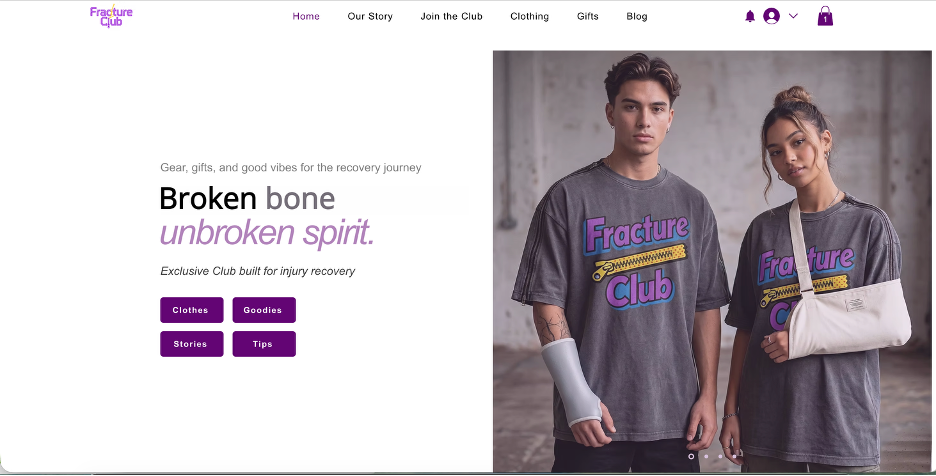
If you want something designed for this exact situation, our recovery wear is built around easy dressing. Our unisex easy-on/off recovery pants with side magnetic zippers open along the side, so you can slip them over a cast or brace without bending your leg through a narrow opening.
[
](fracture-club.com)
For your upper body, the magnetic shoulder zip tee opens at the shoulder, which helps if you’re using crutches or can’t lift your arms comfortably. You can browse everything, including recovery-themed gifts, on the Fracture Club shop.
If you’re after a ready-made option after ankle surgery, our guide to clothes for the first two weeks after ankle surgery and the piece on side zip pants after a broken ankle explain what to look for.
Gifts for someone with a broken foot
If you’re shopping for a friend or family member, practical comes first, and encouragement a close second.
Adaptive clothing. A pair of easy-on pants or a zip tee is a gift that saves effort every single day.
Dressing aids. A reacher, a long-handled shoehorn or a sock aid are the kinds of tools MedlinePlus lists for recovery at home.
Comfort items. A soft blanket, a cast cover for showering or cold weather, and a good pair of flat shoes for the other foot.
Something that makes them smile. Recovery-themed merch that treats a broken bone with humor and resilience reminds them they’re more than a patient.
Your time. Offer to bring dinner, drive them to an appointment or just visit.
Our shop includes recovery-themed gifts and merch made to celebrate resilience, with a portion of proceeds supporting the Bone Health & Osteoporosis Foundation.
A quick checklist before you shop
Measure the widest part of your cast or boot, and check whether pants clear it.
Choose soft waistbands or side closures over buttons and tight zippers.
Stick to hems that sit above the floor.
Buy a pair of stable, flat shoes for your good foot.
Keep a few easy outfits ready so you aren’t deciding when you’re tired.
Ask your provider about swelling, dressings and weight-bearing before you change your routine.
You don’t need a whole new wardrobe. A few well-chosen pieces, repeated, can carry you through weeks of recovery, and they’ll look good doing it.
FAQ
What pants are best for a broken foot in a cast?
Bootcut, wide-leg and stretchy pants with a soft waistband usually fit best because the leg opening clears the cast. Wide-leg sweatpants are an easy first choice. If getting them over the cast is still a struggle, side-zip or magnetic-closure pants open along the leg so you don’t have to pull them over it.
Can I wear jeans with a walking boot?
Yes, in many cases. Straight or slim jeans with some stretch can be tucked into the boot, and a slight cuff keeps the hem from bunching. Size up if the denim feels tight around your calf, and avoid very stiff fabric that pushes against the boot’s edges.
What should I wear on my good foot?
Choose a stable, flat, closed shoe with a grippy sole. A walking boot adds height to one leg, so a shoe lift or a thicker-soled shoe on the other foot can help you walk more evenly. Ask your provider if you’re unsure what suits your injury.
How can I dress myself with a broken foot?
Sit down to dress, put the injured foot into the pant leg first and use a reacher to pull the waistband up. Dressing aids such as a long-handled shoehorn and a sock aid can reduce bending. Adaptive clothing with side zips or magnetic closures makes the whole process faster.
What is a good gift for someone with a broken foot?
The most useful gifts make daily life easier: adaptive pants or a zip tee, dressing aids, comfortable layers and a cast cover. Add something light-hearted, like recovery-themed merch, and a promise of company, which often matters most.
Sources
Cast Outfits: What to Wear With a Long Leg Cast or Brace (Cast Life)
What to Wear With a Foot Cast or Walking Boot (Zero to Disney)
Chic Wardrobe Staples To Keep You Confident While Healing (Foxy Lab NY)
Fashion Tips for Crutches: Cute, Comfortable Outfit Hacks (CrutchesGuide)
Closed reduction of a fractured bone: aftercare (MedlinePlus)
Upper-limb injury leaflet (Southport & Ormskirk Hospital NHS Trust)
Preparing for Foot Surgery: Complete Patient Guide (Michigan Foot Doctors)
Recommended
Comments