
Your Daily Care Schedule Post Fracture: A Recovery Guide

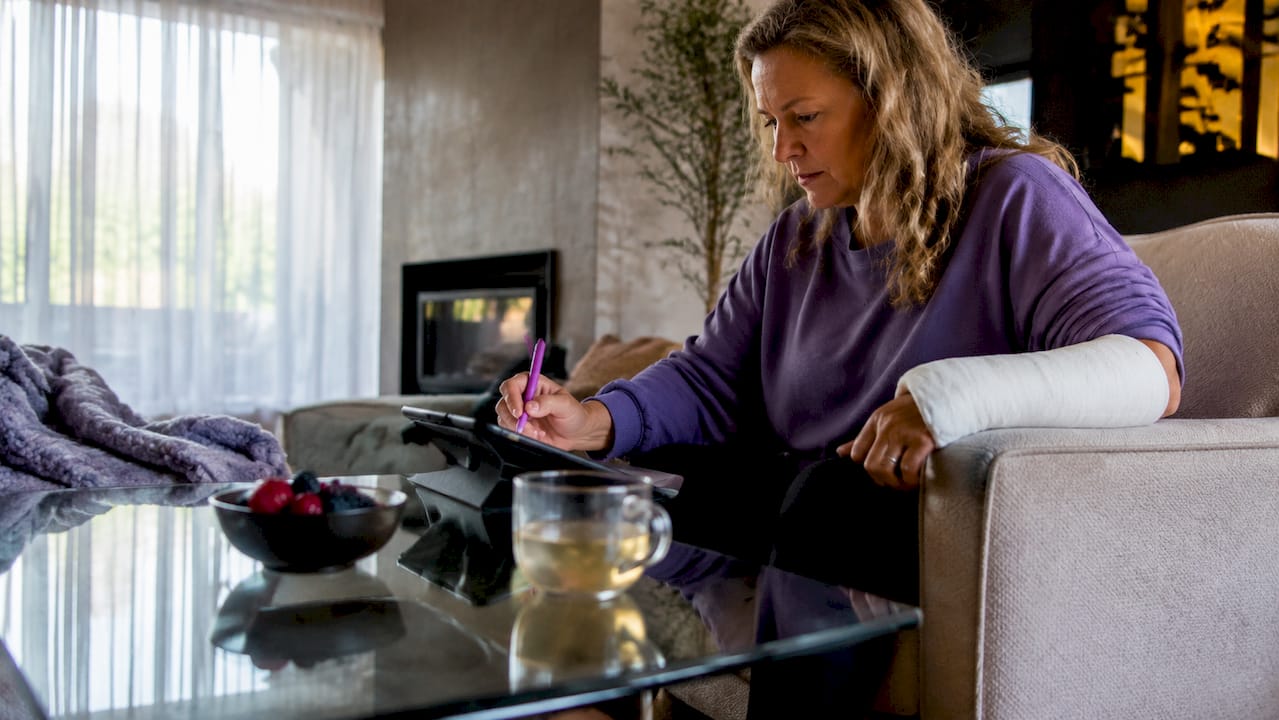
A daily care schedule post fracture is a structured, phase-based plan that guides your activities, exercises, and precautions to protect healing bone and restore full function safely. Without this structure, recovery stalls. Muscle loss after immobilization happens quickly, and post-fracture rehabilitation is designed to counter that by staging movement from gentle activation to full functional loading. Protocols from PhysioWorks and evidence-based physiotherapy programs confirm that guided daily routines, not passive rest alone, produce the best outcomes. This guide gives you a clear, phase-by-phase framework you can follow from day one.
What are the foundational elements of a daily care schedule post fracture?
Every effective post fracture recovery plan starts with the same core building blocks, regardless of which bone you broke. These elements protect healing tissue in the early weeks while keeping the rest of your body as functional as possible.
Rest and swelling control form the base. Elevation keeps fluid from pooling around the injury site, and cryotherapy (applying ice wrapped in a cloth for 15 to 20 minutes, several times daily) reduces both swelling and pain. Resting when tired and avoiding premature weight-bearing are non-negotiable in early recovery. Over-exertion at this stage delays bone healing, not speeds it up.
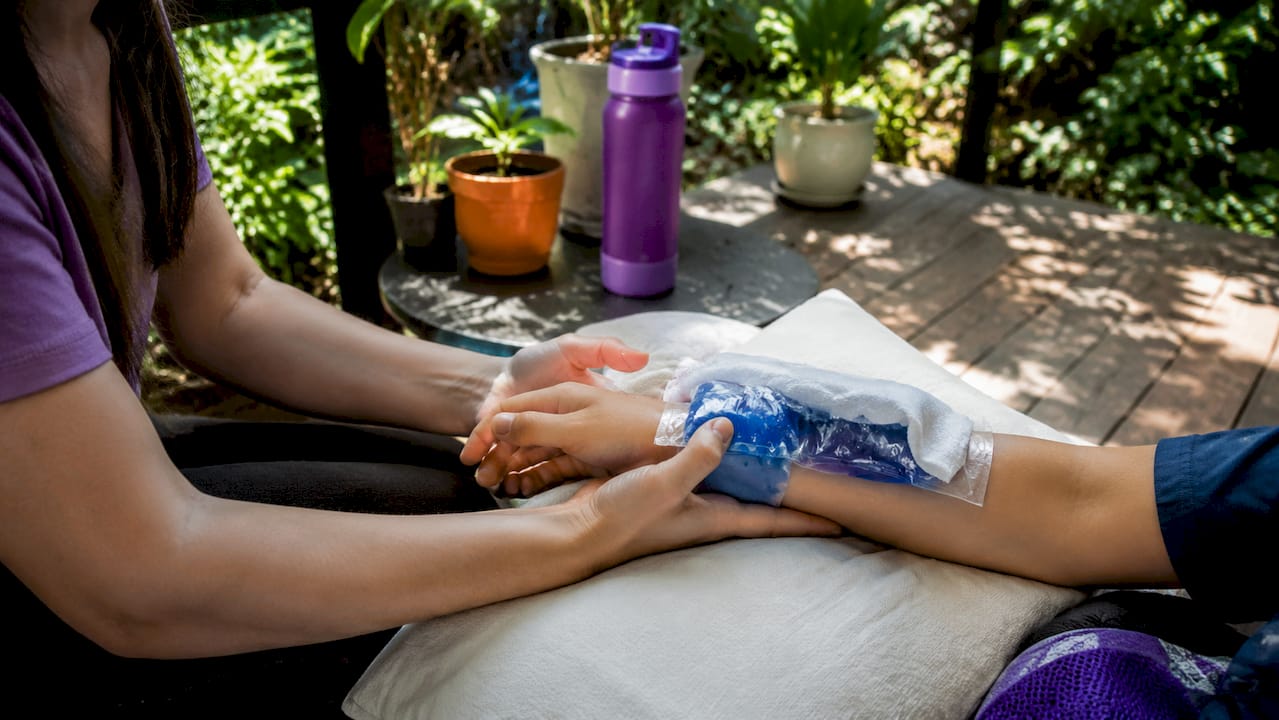
Early joint mobility is the part most people skip, and it matters enormously. Moving the joints above and below your fracture site, such as your ankle and hip when you have a lower leg fracture, prevents stiffness and maintains circulation without stressing the fracture itself. This is a core principle in fracture care guidelines from PhysioWorks: the goal is restoring whole-limb movement, not just waiting for bone to knit.
Muscle activation comes next. Isometric exercises, where you contract a muscle without moving the joint, preserve strength during immobilization. Quad sets (tightening your thigh muscle while your leg is straight) are the standard starting point.
Here are the non-negotiable daily care components to build your routine around:
Swelling management: Elevate the injured limb above heart level for at least 20 minutes, three to four times daily. Use cryotherapy in the first 48 to 72 hours and as needed after that.
Pain monitoring: Track your pain level before and after any activity. A temporary increase of one to two points on a 10-point scale is normal. A spike that does not settle within 30 minutes signals you need to back off.
Joint mobility: Perform gentle range-of-motion exercises for unaffected nearby joints twice daily, morning and evening.
Muscle activation: Complete isometric sets (quad sets, glute sets) two to three times daily as cleared by your physiotherapist.
Nutrition and hydration: Bone healing requires calcium, vitamin D, and protein. Adequate hydration supports tissue repair. Read more about post-fracture nutrition to optimize your intake.
Weight-bearing rules: Follow your surgeon’s or physiotherapist’s weight-bearing instructions exactly. These are not suggestions.
Pro Tip: Set three phone alarms daily labeled “elevate,” “ice,” and “exercises.” Consistency in the first two weeks has a bigger impact on long-term outcomes than any single exercise you do.
How to structure your daily rehabilitation routine by healing phase
The fracture healing timeline breaks naturally into three phases, and your daily physical therapy schedule should shift with each one. Treating week two the same as week ten is one of the most common mistakes in home care after a bone break.
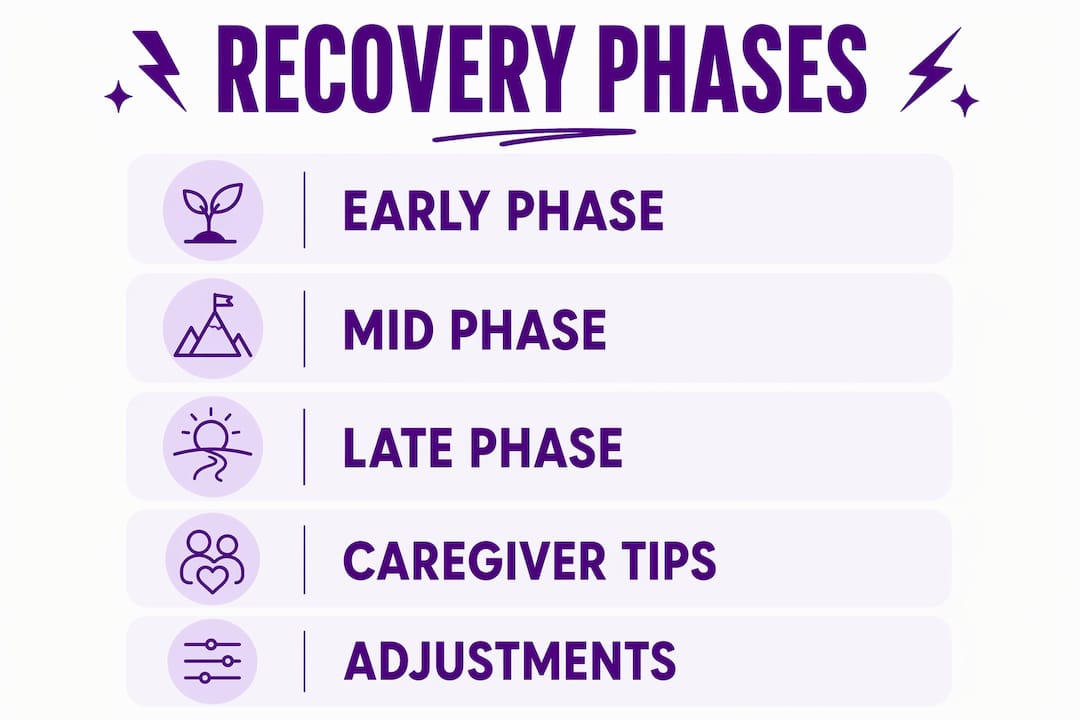
Early phase: weeks 0 to 4
Your body is doing the heavy lifting right now at the cellular level. Your job is to protect that process while staying as mobile as the rest of your body allows.
Morning (15 minutes): Ankle pumps and toe curls (10 reps each, 3 sets) to maintain circulation. Gentle range-of-motion for unaffected joints.
Midday (10 minutes): Isometric quad sets or upper-limb activation depending on injury site. 10 reps, hold 5 seconds each.
Afternoon (20 minutes): Elevation with ice if swelling is present. Deep breathing exercises to support circulation.
Evening (15 minutes): Repeat morning mobility sequence. Review pain and swelling levels and note any changes.
The key rule in this phase: non-weight bearing means non-weight bearing. Early daily care sessions work best when they focus on circulation, nearby joint mobility, and gentle muscle activations rather than loading the fracture site.
Mid phase: weeks 4 to 8
This is where your daily rehabilitation routine starts to feel more like real exercise. Isometric exercises like quad sets started in this window preserve muscle without risking stress at the fracture site, and hamstring and gluteal sets are added alongside them.
Time of Day | Activity | Duration |
Morning | Isometric quad, hamstring, and glute sets (3 x 10 reps) | 20 minutes |
Midday | Partial weight-bearing practice with assistive device if cleared | 10 minutes |
Afternoon | Seated or lying balance and proprioception drills | 15 minutes |
Evening | Gentle joint mobility, elevation, and pain review | 20 minutes |
Weight-bearing in this phase is introduced in steps. A typical progression moves from non-weight bearing to 25% body weight, then 50%, then 75%, and finally full weight-bearing. Critically, this progression is gated by X-ray results and clinical criteria, not calendar days alone. Your schedule may change abruptly based on what imaging shows.
Late phase: weeks 8 to 12 and beyond
Functional strength and gait retraining take center stage. Careful gait retraining is necessary at this stage to restore normal walking patterns and prevent compensatory habits that can cause secondary injuries. Step-ups, balance drills, and walking normalization exercises replace the passive work of earlier phases.
Your daily schedule now looks closer to a structured workout: two to three sessions of 30 to 45 minutes, combining strengthening, balance, and functional movement. Fatigue is still a signal to rest, not push through.
What practical caregiver tips help maintain a daily care schedule post fracture?
Caregivers are the unsung architects of a successful recovery. Caregivers play a vital role by helping create safe environments, managing medications, supporting nutrition, and encouraging adherence to structured routines. Here is how to do that well.
Build the environment first. Clear pathways of rugs, cords, and low furniture. Place frequently used items at reachable height. Install grab bars in the bathroom if needed. A mobility equipment guide can help you identify the right assistive devices for each recovery stage, from walkers to shower chairs.
Manage medications with a system. Use a weekly pill organizer and set phone reminders for each dose. Track any side effects and report them to the prescribing physician. Pain that is not controlled by prescribed medication is a signal to call the care team, not to increase the dose independently.
Support nutrition actively. Prepare meals that are high in protein, calcium, and vitamin D. Smoothies with Greek yogurt, leafy greens, and fortified milk are practical and easy to consume when mobility is limited. Keep a water bottle within reach at all times.
Encourage consistency without pressure. Recovery is not linear. Some days will feel like setbacks. Celebrate small wins: the first time your person completes their full exercise set, the first day without significant swelling, the first unassisted step. These moments matter.
Pro Tip: Create a shared recovery log, either a simple notebook or a shared phone note, where both caregiver and patient track exercises completed, pain levels, and swelling each day. This log becomes invaluable at follow-up appointments.
How to adjust your daily care schedule based on progress and setbacks
Your daily care schedule is not a fixed document. It is a living plan that responds to your body’s signals and your clinician’s findings. Knowing when to adapt is as important as knowing what to do.
Watch for these warning signs that your current schedule needs review:
Swelling that increases rather than decreases after activity
Pain that spikes beyond your baseline and does not settle within 30 to 60 minutes of rest
New stiffness in joints that were previously improving
Weakness or instability that feels worse, not better, week over week
A loss of confidence with weight-bearing or movement that was previously manageable
Adjusting activity based on symptoms such as swelling or pain spikes, and following imaging results, prevents setbacks and promotes optimal healing. This is not about being cautious to the point of inaction. It is about reading the data your body gives you and responding intelligently.
Follow-up imaging is your most objective guide. X-rays confirm whether bone callus is forming as expected, and that information directly determines whether your weight-bearing progression can advance. Do not assume that because a certain number of weeks have passed, you are ready for the next phase.
“Scheduling regular reassessments leads to better outcomes, as daily care plans adapt to recovery pace and symptoms.” — PhysioWorks
When you do need to scale back, reduce the load or duration of exercises rather than stopping entirely. Dropping from three sets to one set, or from 20 minutes of walking practice to 10 minutes, maintains the habit and the neural patterns without stressing healing tissue. Complete rest is rarely the right answer after the first two weeks. Pacing is.
If you experience a genuine setback, such as a fall, a sudden increase in pain, or visible deformity, contact your care team immediately. Do not attempt to self-manage acute changes.
Key takeaways
A structured, phase-based daily care schedule post fracture is the single most effective tool for protecting healing bone, preventing muscle loss, and restoring full function on a predictable timeline.
Point | Details |
Phase your schedule | Early, mid, and late phases require different exercises and loading levels. |
Gate weight-bearing by imaging | X-ray results, not calendar weeks, determine when to progress load. |
Isometrics protect muscle early | Quad sets and glute sets preserve strength without stressing the fracture site. |
Caregivers need a system | Medication tracking, safe environments, and a shared recovery log improve outcomes. |
Adapt based on symptoms | Swelling, pain spikes, or new stiffness are signals to modify, not ignore. |
What I’ve learned from watching people recover with and without a plan
Here is the honest truth: the people who recover fastest are not always the ones who work hardest. They are the ones who follow a plan consistently and adjust it intelligently. I have seen patients push through pain in week three because they felt “fine,” only to set themselves back by four weeks. I have also seen people so afraid of re-injury that they barely move, and their muscles waste away while the bone heals perfectly.
The psychological value of a clear daily schedule is underrated. When you know exactly what you are doing at 9 a.m., noon, and 6 p.m., recovery stops feeling like a passive waiting game. It becomes something you are actively doing. That shift in mindset changes everything, including adherence, mood, and ultimately, outcomes.
My strongest advice: do not rely on generic protocols you find online, including this one, as your sole guide. Use them as a framework, then get a physiotherapist to personalize it. The difference between a generic protocol and one tailored to your fracture type, fitness level, and lifestyle is significant. Post-fracture physiotherapy is not a luxury. It is the mechanism by which your daily schedule actually works.
Recovery pace varies. Some people are back to full function at 10 weeks. Others need 20. Neither is failure. The only failure is having no plan at all.
— Fracture
How Fracture-club supports your recovery every day
Getting dressed during recovery is harder than most people expect, and it can derail your entire morning routine before you even start your exercises. Fracture-club designs adaptive recovery clothing specifically for people healing from fractures and surgeries, so that dressing does not become a daily obstacle.
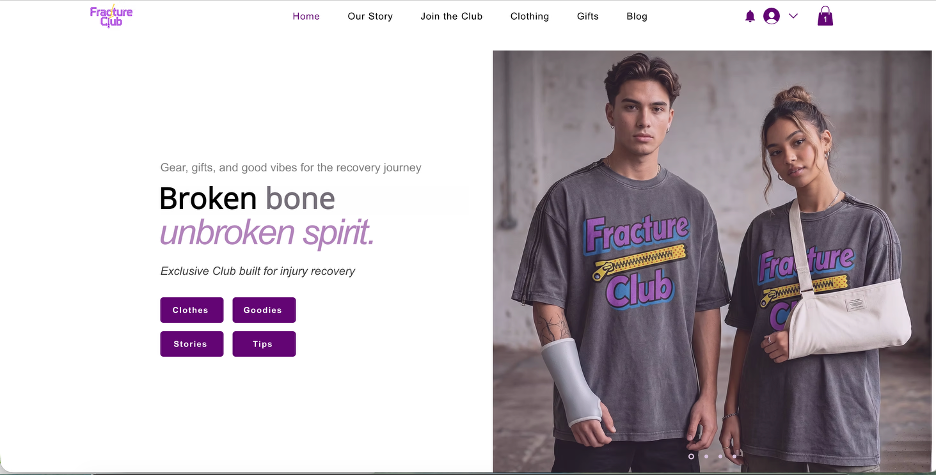
The adaptive recovery pants feature side magnetic zippers that allow you to dress and undress without removing a cast or brace, saving energy and protecting your injury. For upper limb fractures, the easy-on sweatshirt removes the frustration of pulling clothing over a sling or splint. If you want personalized guidance on products that fit your specific recovery stage, the Fracture-club inquiry page connects you with support directly. Recovery is hard enough. Getting dressed should not be.
FAQ
What is a daily care schedule post fracture?
A daily care schedule post fracture is a structured plan of exercises, rest periods, swelling management, and activity guidelines organized by healing phase. It is designed to protect healing bone while preventing muscle loss and restoring function progressively.
How long does fracture recovery take with a daily routine?
The fracture healing timeline varies by bone and severity, but most fractures progress through three phases over 8 to 12 weeks. Following a consistent daily rehabilitation routine, with physiotherapy guidance, supports the fastest safe recovery.
When can I start exercising after a fracture?
Gentle exercises for nearby joints and isometric muscle activations can often begin within the first one to two weeks, depending on your fracture type and medical clearance. Early muscle activation without joint movement is the standard starting point.
What are the signs that I need to adjust my schedule?
Persistent swelling after activity, pain that does not settle within 30 to 60 minutes of rest, and new joint stiffness are all signals to reduce your activity level and consult your physiotherapist before continuing.
How can caregivers best support a daily care schedule?
Caregivers support recovery most effectively by creating a safe home environment, tracking medications, preparing nutrient-rich meals, and maintaining a shared daily log. Consistent encouragement and celebrating small progress milestones also improve adherence significantly.
Recommended
Comments