
What Does Bone Fragility Mean for Your Bone Health?

Bone fragility is defined as the increased risk of fracturing from low-energy trauma, such as a simple fall from standing height, that healthy bones would normally survive. Clinically, this condition is known as skeletal fragility or osteoporotic bone disease, and it affects the spine, hip, wrist, and shoulder most often. Fragility fractures in patients aged 40+ should prompt immediate bone health evaluation. Understanding what bone fragility means is not just reassuring. It is the first step toward doing something about it before a fracture changes your life.
What does bone fragility mean and how is it diagnosed?
Bone fragility is assessed through a combination of clinical history, fracture risk tools, and imaging. The DXA (dual-energy X-ray absorptiometry) scan is the gold standard diagnostic tool for measuring bone mineral density (BMD). The World Health Organization defines osteoporosis at a T-score of -2.5 or below, while a T-score between -1.0 and -2.5 indicates osteopenia, a state of lower-than-normal bone density that precedes osteoporosis.
Screening for women is generally recommended starting at age 65, though earlier screening applies to anyone with significant risk factors. Peak bone mass is achieved by around age 30, which means the habits you build in your twenties and thirties directly shape your fracture risk decades later. That is a sobering fact worth sharing with younger family members.

However, BMD alone does not tell the full story. Bone mineral density explains about 60% of bone fragility, leaving 40% attributable to bone quality and microarchitecture that a DXA scan simply cannot detect. This is why two people with identical T-scores can have very different fracture outcomes.
Diagnostic tool | What it measures | Limitation |
DXA scan | Bone mineral density (T-score) | Cannot assess bone microarchitecture or material quality |
FRAX tool | 10-year fracture probability | Does not fully account for bone quality factors |
Trabecular Bone Score (TBS) | Bone texture and microarchitecture | Less widely available; most useful in diabetes patients |
Clinical history | Fall risk, fracture history, medications | Subjective; requires thorough patient interview |
Pro Tip: If you have had a fracture from a minor bump or fall, ask your doctor specifically about a TBS assessment alongside your DXA scan. The Trabecular Bone Score predicts fracture risk independently and adds meaningful detail that T-scores miss.
What causes bone fragility? Key risk factors and biological mechanisms
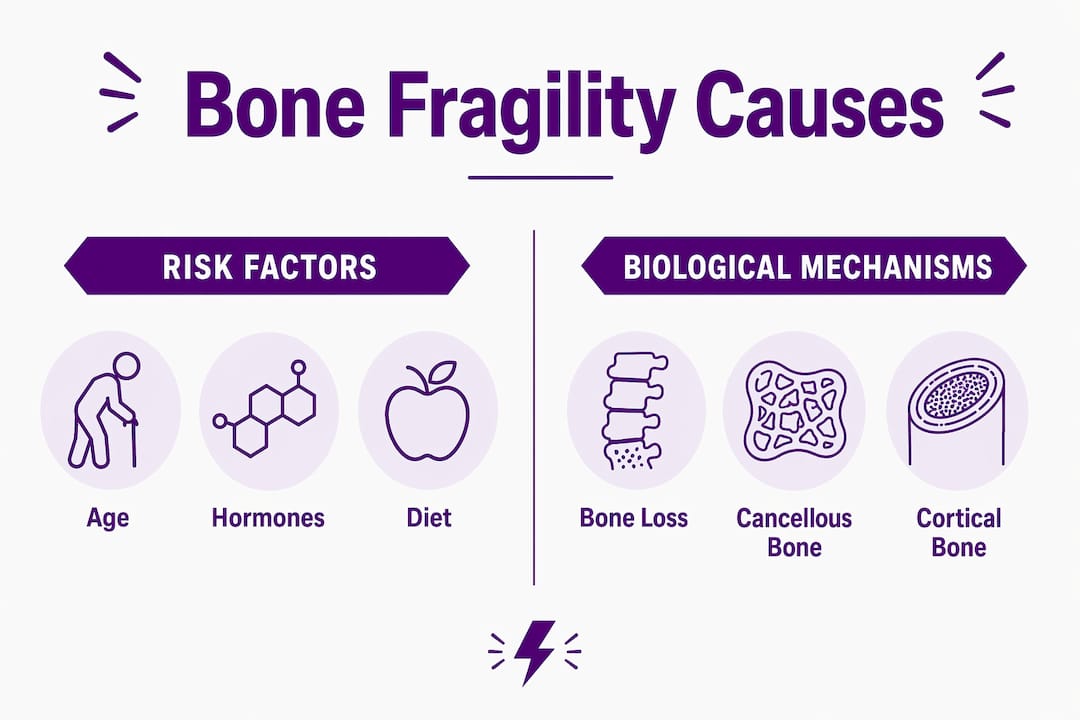
Bone fragility results from a complex imbalance between bone resorption (breakdown) and bone formation, driven by hormonal, metabolic, and lifestyle factors rather than aging alone. Estrogen deficiency after menopause is one of the strongest drivers of accelerated bone loss, because estrogen normally suppresses the activity of osteoclasts, the cells that break bone down. When estrogen drops, resorption outpaces formation and structural deterioration follows.
Beyond menopause, several other causes contribute directly to weakened bones:
Chronic medication use. Long-term glucocorticoids (such as prednisone), proton pump inhibitors, and certain anticonvulsants all reduce bone density over time.
Metabolic and systemic diseases. Diabetes, kidney disease, and cardiovascular disease share molecular pathways with bone metabolism. Systemic conditions like diabetes contribute directly to bone fragility and complicate treatment due to potential drug interactions.
Nutritional deficiencies. Calcium and vitamin D deficiencies are highly prevalent in osteoporotic patients. Research shows 99% of studied patients had intake below recommended levels, correlating with lower BMD and higher fracture risk.
Systemic frailty. Frail individuals show a 66% higher fracture risk and 110% higher mortality risk compared to non-frail peers. Frailty and bone fragility reinforce each other in a cycle that is hard to break without deliberate intervention.
Sedentary behavior. Weight-bearing activity stimulates bone formation. Prolonged inactivity removes that stimulus and accelerates loss.
Bone loss also varies by bone type. Cancellous bone in the spine and wrist resorbs faster than cortical bone, which explains why vertebral compression fractures and wrist fractures are often the first signs of fragility. After age 50, individuals lose 1 to 3% of bone mass per year, and a single standard deviation decrease in BMD doubles fracture risk. That rate of loss makes early action genuinely urgent.
What is the difference between bone density and bone quality?
Bone density measures the mineral content packed into a given volume of bone tissue. Higher density generally means stronger bone, but the relationship is not absolute. Bone quality refers to the structural and material properties that determine how well bone resists fracture, including microarchitecture, collagen cross-linking, and the degree of mineralization at the microscopic level.
“A normal DXA score can mask significant fracture risk due to impaired bone microarchitecture and material properties, which constitute about 40% of bone strength but are not captured by conventional scans.” — Advanced bone fragility diagnostics
This distinction matters clinically. Some individuals with normal bone density still experience fragility fractures because their bone quality is compromised. Collagen cross-linking abnormalities, for example, reduce the energy a bone can absorb before breaking, even when mineral content looks adequate on a scan. Diabetes is a well-documented example: patients often have normal or even high BMD but elevated fracture risk because hyperglycemia damages collagen structure.
Emerging tools like the Trabecular Bone Score and high-resolution peripheral quantitative CT (HR-pQCT) are beginning to close this diagnostic gap. For most people, though, the practical takeaway is this: do not assume a “normal” DXA result means your bones are fully protected. Discuss your full fracture risk profile with your doctor, not just your T-score.
Pro Tip: Ask your physician about post-fracture nutrition as part of your bone quality strategy. Collagen synthesis depends on protein, vitamin C, and zinc, nutrients that standard bone health conversations often overlook.
How can you assess and improve your bone strength?
Knowing where you stand is the starting point. Here is a practical sequence for assessing and improving bone strength:
Get screened at the right time. Women should start DXA screening at age 65. Men and younger women with risk factors (early menopause, steroid use, family history of hip fracture) should discuss earlier screening with their doctor.
Assess your fall risk. Muscle strength and balance matter as much as bone density. A simple Timed Up and Go (TUG) test, performed in a clinical setting, identifies fall risk quickly and guides physical therapy referrals.
Optimize calcium and vitamin D intake. Adults over 50 need 1,200 mg of calcium daily from food sources like dairy, fortified plant milks, and leafy greens, plus 800 to 1,000 IU of vitamin D. Supplements fill gaps when diet falls short.
Add weight-bearing and resistance exercise. Walking, hiking, dancing, and resistance training all stimulate bone formation. Aim for at least 30 minutes of weight-bearing activity most days of the week.
Review your medications. If you take glucocorticoids or other bone-depleting drugs long-term, ask about bone-protective co-prescribing with bisphosphonates such as alendronate or risedronate.
Consider pharmacological treatment. For confirmed osteoporosis, medications including bisphosphonates, denosumab, and teriparatide reduce fracture risk significantly. Integrated care pathways that combine these treatments with nutrition and fall prevention reduce both mortality and refracture rates.
Make your home safer. Remove trip hazards, install grab bars in bathrooms, and improve lighting. Supportive footwear also plays a direct role. Research on footwear and injury prevention confirms that proper sole grip and ankle support reduce fall-related fracture risk in older adults.
Strategy | Primary benefit | Who benefits most |
DXA screening | Identifies bone loss early | Women 65+, high-risk adults |
Weight-bearing exercise | Stimulates bone formation | All adults, especially postmenopausal women |
Calcium and vitamin D | Supports bone mineralization | Adults with dietary gaps or malabsorption |
Bisphosphonates | Reduces bone resorption | Confirmed osteoporosis patients |
Fall prevention measures | Lowers fracture incidence | Frail older adults, those with balance issues |
Exploring bone health awareness gifts is also a meaningful way to support a loved one who is managing fragility, combining practical tools with emotional encouragement.
Key takeaways
Bone fragility requires addressing both bone density and bone quality together, because density alone explains only 60% of fracture risk.
Point | Details |
Bone fragility defined | Increased fracture risk from low-energy trauma, most common at spine, hip, wrist, and shoulder. |
Density vs. quality | DXA scans measure density but miss the 40% of fracture risk tied to bone microarchitecture and material properties. |
Key causes | Estrogen deficiency, glucocorticoid use, calcium and vitamin D deficiency, and systemic frailty all drive bone loss. |
Screening timing | Women should start DXA screening at 65; high-risk individuals should screen earlier. |
Management approach | Combine exercise, nutrition, medication review, fall prevention, and regular monitoring for best outcomes. |
Why bone fragility is more manageable than most people think
Here is what years of working alongside the bone health and recovery community has taught me: most people who receive a fragility fracture diagnosis feel blindsided. They assumed fractures were something that happened to other people, or that their bones were fine because nothing had broken before. That assumption is the real problem.
Bone fragility is not a sudden event. It builds quietly over years, shaped by hormones, diet, activity levels, and medications. The diagnosis often arrives only after the first fracture, which is exactly when it should have been caught earlier. The medical community is improving at this, with fracture liaison services and integrated care models gaining traction, but patient awareness still lags behind.
What I find genuinely encouraging is that bone health responds to intervention at almost any age. The research on resistance training in adults over 70 is striking. Bone formation markers improve within weeks of starting a structured program. Nutritional correction of calcium and vitamin D deficiency shows measurable BMD improvements within 12 months. These are not marginal gains. They are meaningful reductions in fracture risk.
The myth I push back on hardest is the idea that fragility is simply “getting old.” Aging is a factor, but it is not destiny. Hormonal management, medication review, targeted nutrition, and fall prevention together create a genuinely different trajectory. The people who do best are the ones who treat bone health as an ongoing practice, not a one-time scan result.
— Fracture
Recover with confidence using Fracture-club
If you or someone you love is healing from a fragility fracture, the recovery process deserves as much attention as the diagnosis itself.
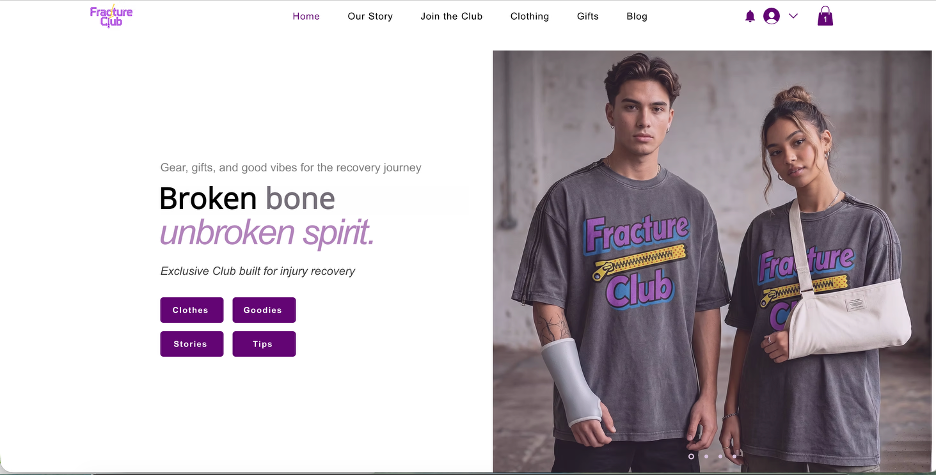
Fracture-club designs adaptive recovery clothing specifically for people healing from fractures and bone injuries. The adaptive recovery pants feature magnetic side zippers that make dressing possible even with a cast or brace, removing one of the most frustrating daily obstacles during recovery. The easy-on recovery sweatshirt is built for upper limb injuries, so comfort does not have to wait until the cast comes off. A portion of every purchase supports the Bone Health & Osteoporosis Foundation. Visit Fracture-club to find products that make healing a little lighter.
FAQ
What does bone fragility mean in simple terms?
Bone fragility means your bones are more likely to break from minor impacts or falls that would not normally cause a fracture. It results from reduced bone mass, deteriorated bone quality, or both.
Is bone fragility the same as osteoporosis?
Osteoporosis is the most common cause of bone fragility, but not the only one. Bone fragility is the broader clinical outcome, defined by increased fracture risk, while osteoporosis is a specific diagnosis based on T-score thresholds from a DXA scan.
What are the first symptoms of bone fragility?
Bone fragility often has no symptoms until a fracture occurs. Back pain from a vertebral compression fracture, loss of height, or a stooped posture can be early signs that warrant a bone density evaluation.
How serious is bone fragility?
Bone fragility is serious. Frail individuals with bone fragility face a 66% higher fracture risk and 110% higher mortality risk than those without frailty, particularly following hip fractures.
Can bone fragility be reversed?
Bone fragility cannot always be fully reversed, but it can be meaningfully reduced. Medications like bisphosphonates and teriparatide, combined with calcium, vitamin D, and weight-bearing exercise, improve bone density and lower fracture risk at any age.
Recommended
Comments