
How Belonging Accelerates Healing After Injury


Belonging is defined as the felt sense of being accepted, valued, and safe within a community. That feeling is not just emotionally comforting. It is biologically active. Research shows that social isolation rivals smoking 15 cigarettes daily in its damage to health, triggering inflammation and weakening immune function. For anyone recovering from an injury, understanding how belonging accelerates healing is not a soft concept. It is a clinical reality. Your nervous system heals faster when it feels safe. Community creates that safety.
How does belonging accelerate healing in the body?
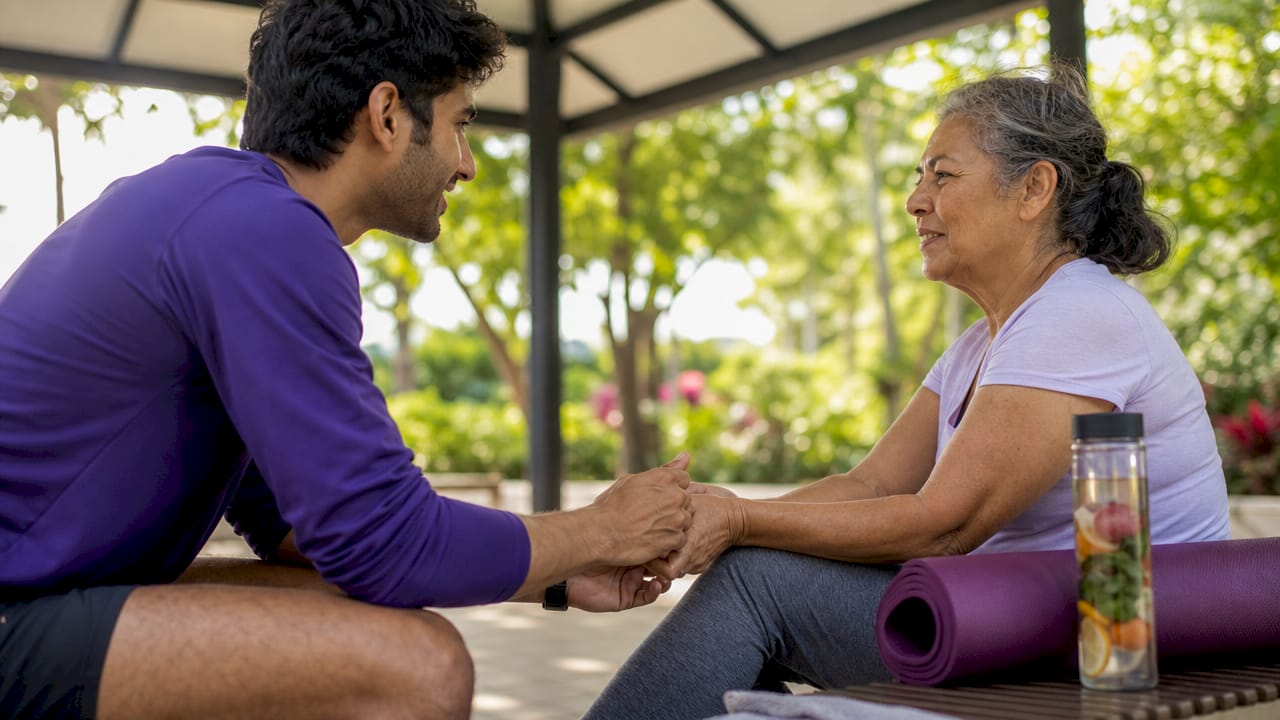
Belonging works on your body at the cellular level. Social connection triggers oxytocin release, which lowers cortisol, reduces inflammation, and helps reverse trauma-induced patterns in the brain. Oxytocin also supports immune function and reduces the risk of setbacks across recovery types. That is not a metaphor. It is measurable chemistry.
Your nervous system operates in two basic modes: threat and safety. When you feel isolated after an injury, your body stays in threat mode. Stress hormones remain elevated. Inflammation persists. Tissue repair slows. When you feel connected and accepted, your nervous system shifts into safety mode, and physical healing can actually proceed.
“The nervous system cannot settle or repair without signals of respect, inclusion, and belonging.” — Social Safety Theory
The biology goes deeper than hormones. Chronic loneliness produces a physiological signal like hunger, a primal drive that compounds stress when ignored. Belonging satisfies that drive. It also regulates gene expression linked to inflammation, meaning the people around you literally influence how your cells behave during recovery.
Key biological effects of belonging during recovery:
Oxytocin release calms the nervous system and lowers cortisol
Reduced inflammation supports faster tissue repair
Immune function improves with consistent social connection
Threat-mode stress responses decrease when safety signals are present
Trauma-related brain patterns begin to reverse with trusted connection
What are the core components of real belonging in recovery?
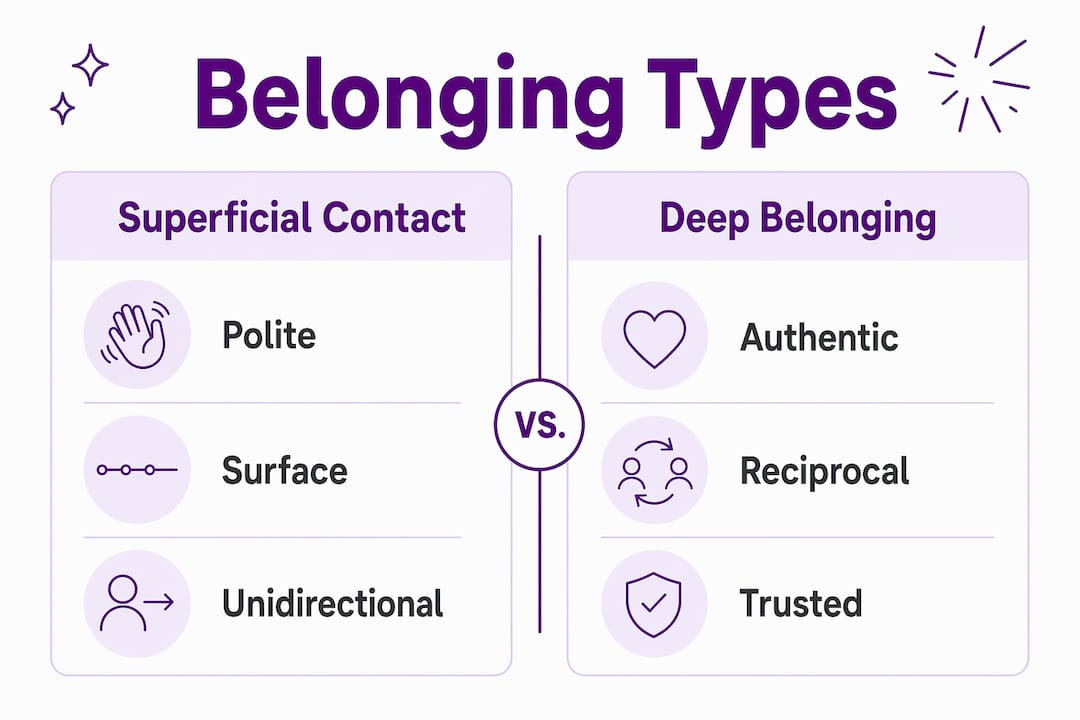
Not all social contact creates belonging. Sitting in a waiting room with other people does not make you feel less alone. Yale researchers identify five core experiences that define genuine belonging: feeling authentic, having a meaningful role, feeling valued, experiencing reciprocity, and feeling secure. Each one matters. Miss one, and belonging becomes surface-level inclusion that does not move the needle on healing.
Here is what each element looks like in practice during injury recovery:
Feeling authentic. You can show up as you are, cast and all, without performing wellness you do not feel. Vulnerability is allowed.
Having a meaningful role. You contribute something. You are not just a recipient of care. Even sharing your story helps someone else.
Feeling valued. Others notice your presence. Your absence would be felt. You matter to the group.
Experiencing reciprocity. The relationship flows both ways. You give and receive support without keeping score.
Feeling secure. You trust that the community will not judge or abandon you when things get hard.
These five elements separate deep belonging from mere social presence. The difference matters enormously for recovery outcomes.
Superficial social contact | Deep belonging |
Polite but surface-level interaction | Authentic, honest exchange |
You perform wellness for others | You are accepted as you are |
One-directional support | Reciprocal care and contribution |
No defined role in the group | You have a purpose within the community |
Low trust, high performance | High trust, low performance pressure |
Maintaining your identity during recovery is one of the hardest parts of injury. Deep belonging protects that identity by reminding you that you are more than your injury.
How does belonging support mental health during injury recovery?
Connection is one of the strongest predictors of recovery outcomes because it directly counters shame and isolation. Shame thrives in silence. It tells you that needing help makes you weak, that your injury defines you, that you are a burden. Community breaks that story. When others share their own struggles and still show up for you, shame loses its grip.
Belonging also reinforces a positive identity. You stop seeing yourself only as a patient and start seeing yourself as a person who is healing, contributing, and still connected to life. That shift in self-perception has real effects on motivation, pain tolerance, and emotional resilience.
Mental health benefits of belonging during recovery:
Reduces anxiety and depression linked to isolation
Counters shame narratives that slow emotional healing
Builds hope through shared stories of recovery
Improves emotional regulation through trusted relationships
Reduces risk of mental health setbacks by providing consistent support
Belonging is as fundamental to health as food and sleep, according to a 2020 study. That finding reframes how you should think about your recovery plan. Rest, nutrition, and physical therapy are not enough on their own. Social safety is a biological requirement, not a bonus.
Pro Tip: If in-person community feels out of reach right now, start small. A single honest conversation with one trusted person activates the same oxytocin response as a larger group. Quality of connection matters far more than quantity.
The resilient self during injury recovery is built through relationships, not in spite of them. The nervous system needs repeated signals of safety to fully regulate. One conversation helps. Consistent community heals.
What practical steps build belonging during injury recovery?
The most common mistake people make is waiting until they feel better before seeking community. Belonging is not a reward for healing. It is a prerequisite for healing. You do not need to arrive whole. You need to arrive.
Here are five practical steps to build genuine belonging during your recovery:
Choose depth over breadth. One or two deeply engaged communities benefit healing far more than many superficial memberships. Find one group where you feel safe and invest there.
Show up repeatedly at low stakes. Trust builds through repeated, low-pressure interactions. A weekly check-in call, a group chat, a shared meal. Consistency matters more than intensity.
Seek environments built on respect and inclusion. Not every community is safe. Look for spaces where people are honest about struggle, where no one is expected to perform positivity they do not feel.
Let yourself receive. Many people in recovery resist help because it feels like weakness. Receiving care is actually part of reciprocity. It gives others the chance to contribute, which strengthens the bond.
Build a layered support network. Peers who have been through similar injuries, family members who understand your limits, and professional support each serve different functions. You need all three layers.
Pro Tip: Tell one person in your community something true about how you are actually feeling today. Not the polished version. The real one. That single act of vulnerability builds more trust than months of surface-level interaction.
Staying positive during recovery is easier when you are not doing it alone. Community does not eliminate the hard days. It makes the hard days survivable, and sometimes even meaningful.
Healing in community builds resilience by creating space for safety, vulnerability, and accountability without demanding perfection. That is the environment where real recovery happens.
Key Takeaways
Belonging is a biological necessity for healing, not an emotional luxury. Injury recovery that includes genuine community connection produces better physical and mental health outcomes than recovery attempted in isolation.
Point | Details |
Belonging is biological | Oxytocin release from connection lowers cortisol and supports immune function during recovery. |
Social isolation harms healing | Isolation triggers the same stress pathways as smoking, slowing tissue repair and immune response. |
Five elements define real belonging | Authenticity, meaningful roles, feeling valued, reciprocity, and security separate deep belonging from surface contact. |
Belonging precedes healing | Community is a prerequisite for nervous system regulation, not a reward for getting better. |
Quality beats quantity | One or two trusted communities produce stronger recovery outcomes than many shallow social connections. |
What I have learned about belonging and healing
I used to think belonging was something you earned after you got better. You healed, you recovered, and then you rejoined the world. That belief kept me isolated at exactly the moments I needed connection most.
What I have seen, again and again, is that the people who recover with the most resilience are not the ones who pushed hardest in isolation. They are the ones who let others in early. They showed up imperfect, asked for help, and stayed connected even when it felt uncomfortable. That vulnerability was not weakness. It was the mechanism of healing itself.
The fear of being a burden is real. So is the fear that others will not understand what you are going through. But those fears are worth facing. The nervous system cannot regulate in a vacuum. It needs other nervous systems around it, calm and present, signaling that safety is real.
If you are in recovery right now, I want you to hear this clearly: you do not have to earn your place in community. You belong there now, exactly as you are. The healing does not come before the belonging. The belonging is what makes the healing possible.
— Fracture
Recovery wear and community from Fracture-club
Physical comfort and emotional connection both matter during recovery. Fracture-club was built for exactly this moment in your life.
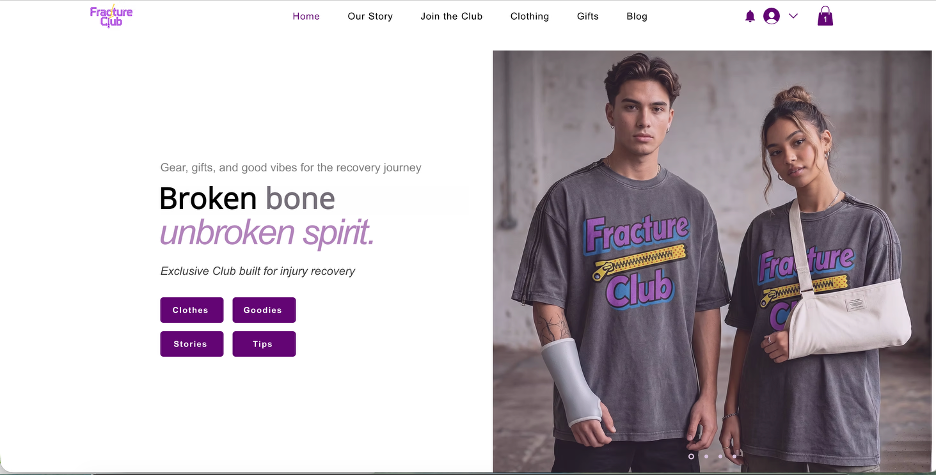
Fracture-club’s adaptive recovery pants are designed with magnetic side zippers so you can dress independently, even with a cast or brace. That independence is not just practical. It restores a sense of self at a time when everything feels out of your control. Fracture-club also connects you with a community of people who understand recovery from the inside. A portion of every purchase supports the Bone Health & Osteoporosis Foundation. You can also reach out through personalized recovery support to find the right fit for where you are right now.
FAQ
How does belonging physically speed up recovery?
Belonging triggers oxytocin release, which lowers cortisol and reduces inflammation. Lower inflammation means faster tissue repair and stronger immune function during physical recovery.
Can loneliness actually slow physical healing?
Yes. Chronic loneliness activates stress-related genes that increase inflammation and suppress immune function, directly interfering with the body’s ability to repair itself.
What is the difference between belonging and just being around people?
Belonging requires authenticity, reciprocity, and trust. Simply being around others without those elements does not activate the biological safety signals that support healing.
How do I find community when I am injured and less mobile?
Start with one trusted person and build from there. Online communities, phone calls, and small group chats all activate the same connection response as in-person interaction when the quality of engagement is genuine.
Does belonging help with the mental health side of injury recovery?
Belonging directly counters shame and isolation, which are the two biggest mental health risks during injury recovery. Consistent social connection improves emotional regulation and reduces the risk of anxiety and depression.
Recommended
Comments