
Clothing That Lets You Dress Without Bending After Knee Surgery

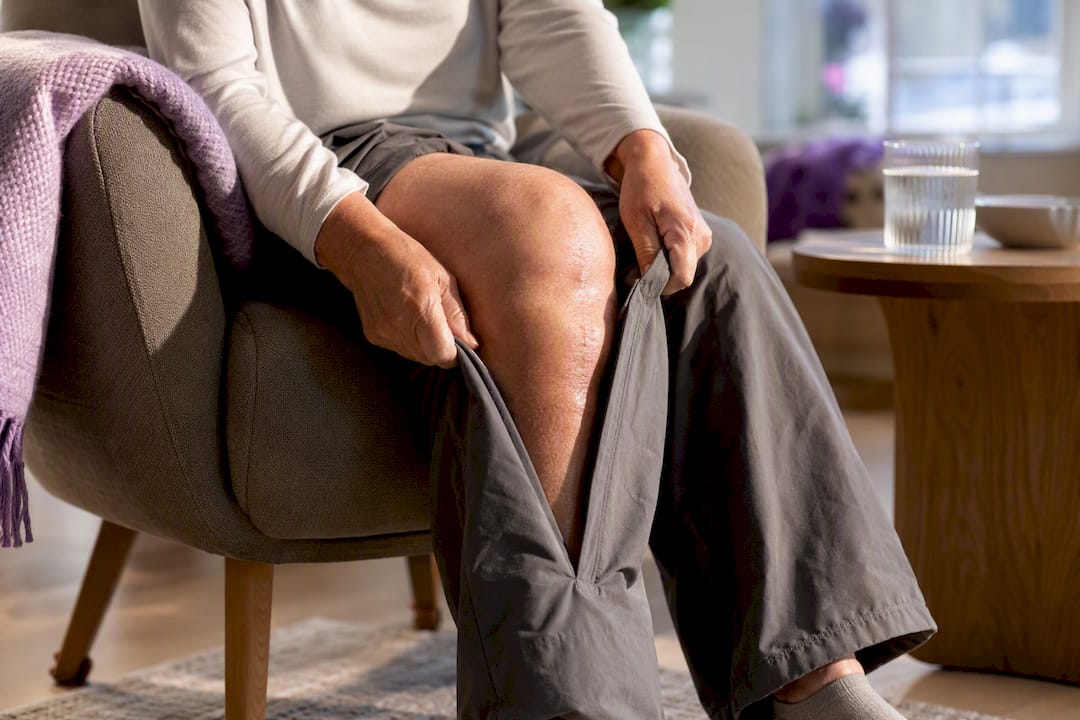
The safest outfit for the first days home is a front-opening top, wide-leg pull-on pants (or adaptive side-open pants), and a slip-on shoe with good grip. This combination keeps your incision visible and easy to reach, avoids bending or pulling that strains your new joint, and lowers your fall risk. Keep a reacher and a sock aid within arm’s reach before you even leave for the hospital.
TL;DR:
Wide-leg pull-on pants with large leg openings are essential to avoid pulling or catching on swollen knees during dressing and post-surgery movement.
Front-opening tops like zip-up hoodies and button-down shirts reduce overhead reaching, helping maintain balance and prevent strain while dressing during recovery.
Slip-on shoes with firm heel counters and non-slip soles are safest, especially considering swelling and the need for stability on unsteady floors.
Dressing techniques should follow a sequence, starting with the surgical leg while seated, and using tools like reachers, sock aids, and long-handled shoes to avoid bending or twisting.
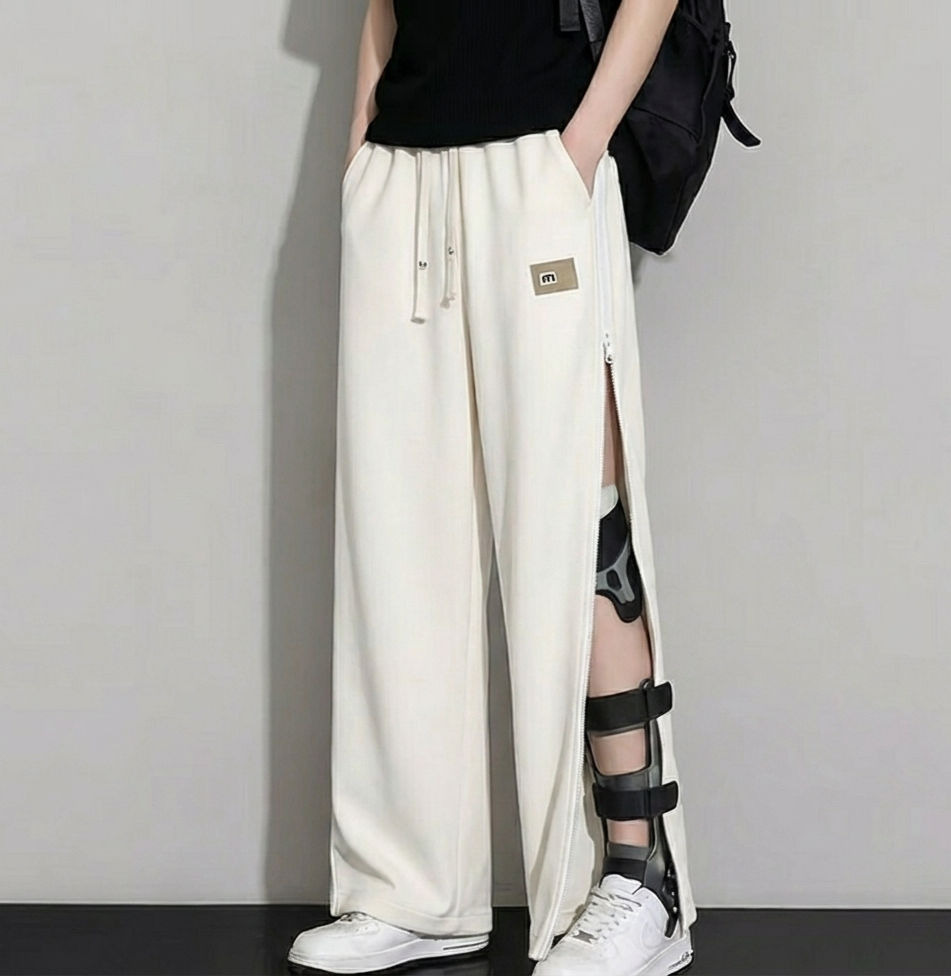
Adaptive pants with full leg magnetic zippers and stretchy fabrics facilitate dressing and accommodate swelling better than traditional clothing options.
Table of Contents
Best Clothing After Knee Surgery: Choosing the Right Pants
Pants are the single hardest clothing decision you will make this month, and the leg opening matters more than anything else on the label. A pant that looks roomy on the hanger can still refuse to slide past a swollen knee, and you will not know until you try it seated, with your leg as straight as you can manage.
That is actually the test worth running before surgery day: sit down, straighten the leg, and slide the pant leg past the knee without help from your hands at the joint itself. If it catches or needs tugging, it fails, no matter how loose the waistband felt in the store. This single check does more to predict comfortable pants after surgery than any size chart.
What to look for in pants for knee surgery:
Wide-leg pull-on styles with generous leg openings that clear dressings, bandages, or a hinged brace without stretching fabric across the incision.
Elastic waistbands that expand with swelling instead of digging into your abdomen when you sit for long stretches.
Adaptive side-open designs with snaps, zips, or magnetic closures running the length of the leg, which matter most when a bulky dressing or cold-therapy wrap needs to stay put.
Loose shorts for warm weather or at-home days when you do not need full leg coverage.
Soft, pre-washed fabric that will not irritate the incision line the first time it touches skin.
Fit is not just about size. Wide-leg pull-on pants and adaptive side-open designs clear dressings and braces precisely because the leg opening, not the waist measurement, is the deciding factor. If you are choosing between two pairs that fit everywhere else, pick the one with the wider hem.
Buy or borrow more than one pair before surgery. Staging three to four pairs of wide-leg pull-on pants alongside a few loose shorts means you are never stuck doing laundry on a day when standing at the machine is the last thing you want to do. Wash everything before you wear it. New fabric often carries stiff sizing agents that can rub against a fresh incision, and a gentle wash softens that up fast. For a closer look at pant construction and how different waistbands perform under swelling, see our guide to choosing comfortable recovery pants.
[
Tops and Layering That Make Dressing Easier
Your arms will work fine after knee surgery, but overhead reaching still puts you off balance right when you need to be steadiest. That is the whole argument for front-opening tops: zip-up hoodies, button-downs, magnetic-closure shirts, and simple front-snap robes let you dress without lifting your arms above your shoulders or twisting your torso while your leg is still healing.
Buy one size up through the chest and shoulders, especially if you are also wearing a knee brace that changes how you sit and reach. Sleeves matter too. Choose sleeves loose enough to clear any dressings on your arm from IV lines, and avoid anything with tight cuffs that require pulling or stretching to get over your hand.
Tops that work, and tops that don’t:
Front-zip fleece or hoodies for cool days, easy to put on seated and easy to remove one-handed if needed.
Button-down shirts in soft cotton, roomy enough to move in without straining a seam.
Magnetic-closure shirts that mimic buttons but require zero fine motor grip, useful if your hands are stiff from IV bruising.
Front-snap nightshirts or robes for sleeping and lounging during the first week.
Pullover sweatshirts are the one thing to skip entirely. Anything you have to pull over your head forces an overhead reach and a twist at exactly the moment your balance is least reliable.
If you want to see how adaptive top design solves this same problem for other injuries, our easy-on/off sweatshirt uses the same front-access logic described here, just built for upper-body recovery instead.
What Shoes Are Safest to Wear After Knee Surgery?
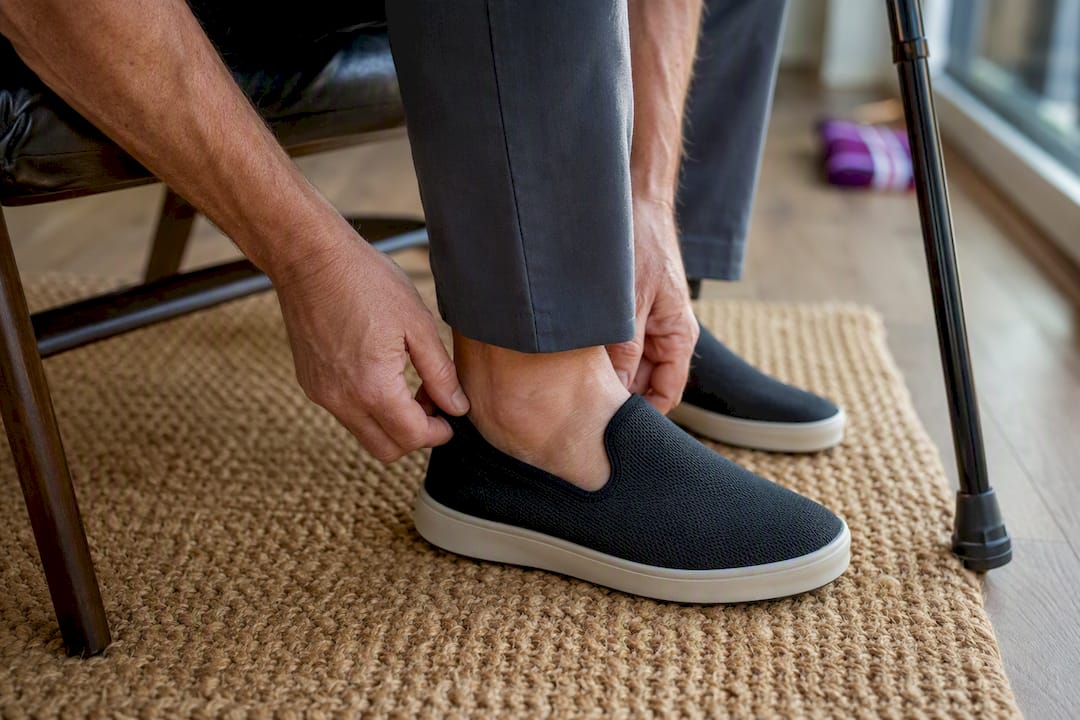
Skip anything you have to bend over to tie, and skip anything without a back strap. Those two rules eliminate most of what is already in your closet, which is why so many people end up buying one new pair specifically for recovery.
Choose a closed, slip-on style with a firm heel counter. A shoe that grips your heel keeps your foot from sliding forward inside the shoe when you are using a walker or crutches, which matters more than cushioning does in these first weeks.
Go up half a size. Postoperative swelling typically peaks between day two and day five and can increase joint circumference by 10 to 20 percent. That swelling often extends down into the foot and ankle, so a shoe that fit perfectly two weeks ago may feel tight on surgery day.
Check the sole for real grip. A non-slip rubber sole is non-negotiable on tile, hardwood, or any bathroom floor you will be crossing while still unsteady.
Convert a familiar sneaker instead of buying an unfamiliar “adaptive” shoe. Elastic no-tie laces turn your everyday sneakers into a slip-on shoe in minutes, and keeping a shoe you already trust preserves the gait feel you are used to, which is one less adjustment your brain has to make.
Rule out backless slippers, heels, and anything requiring you to tie laces while standing on one leg near a walker. These are the shoes physical therapists mention most often when a patient describes a near-fall in the first two weeks.
Step-By-Step Dressing Techniques and Tools to Stay Safe
Dressing safely after knee surgery comes down to sequence, not speed. Do it out of order and you will find yourself bending forward, twisting, or standing on one leg to fish a pant leg over your foot, which is exactly the motion your surgeon told you to avoid.
Sit on a stable, firm surface with both feet flat, not the edge of a soft bed or a low couch that makes standing back up harder than it needs to be.
Dress the surgical leg first. Slide pants, socks, and shoes onto the operated leg before you touch the other side. This keeps you from having to bend that knee sharply to catch up later.
Straighten the surgical leg slightly forward while dressing it. Positioning the leg this way keeps hems and seams from riding up against the incision as you pull fabric into place.
Secure all clothing while still seated, including zipping pants and tying (or fastening) shoes, before you attempt to stand.
Stand only with support, using a walker, cane, or sturdy armrest, never a piece of furniture on wheels.
Follow the transfer rule “up with the good, down with the bad” for showers and any step up or down: lead with your non-surgical leg going up or in, and lead with your surgical leg coming down or out. This clinician-backed sequence keeps your body weight on the stronger leg during the riskiest part of the movement.
Use a reacher for socks, pants, and anything on the floor, a sock aid to avoid bending to your foot, and a long-handled shoehorn so you never have to reach past your knee to adjust a heel.
Ask for help without hesitation on days when swelling, pain, or fatigue makes any of this harder than usual. That is not a setback, it is just recovery.
Before any of this, run a few safety checks: confirm your chair is at a height where your knees stay level with or below your hips when seated, wear non-slip socks or shoes rather than bare feet on smooth floors, and clear any rugs, cords, or clutter from the path between your bed and bathroom.
Pro Tip: Test a new pair of pants or shoes while seated, before you ever try to walk in them. If a seam pulls or a heel slips while you’re sitting still, it will only get worse once you’re standing and moving.
Fabrics and Fit Details That Prevent Irritation
Soft, breathable fabric is not a comfort upgrade, it is a practical necessity when you have a fresh incision. Cotton and modal blends move with your body and reduce friction against healing skin, while stiff materials fight you at every turn.
Fabrics and fit choices that help, and ones that hurt:
Choose soft cotton or modal knits that flex with your movement instead of resisting it.
Avoid stiff denim and heavy canvas. These fabrics hold their shape rather than yielding, which means they push back against swelling and rub against incision sites.
Check for seams and tags positioned over the incision before you buy. A seam that seems harmless in the fitting room can become genuinely painful once you are wearing it for hours at a time with a fresh wound underneath.
Wash every new garment before wearing it. Manufacturing residue and stiff sizing agents are common irritants nobody thinks about until the fabric is already against broken skin.
Leave room for a brace, compression wrap, or cold-therapy sleeve. If you know you will be using any of these, size your pants and shorts around them, not around your pre-surgery measurements.
Getting this part right matters more than most people expect, since you will likely wear the same handful of garments daily for weeks. A scratchy waistband or a seam in the wrong place stops being a minor annoyance and starts being the thing you dread every time you get dressed.
What to Pack for the Hospital and Wear Home
Pack the outfit you plan to leave in, not just clothes for the hospital stay itself. Most hospitals ask patients to bring or wear loose-fitting shorts or pants and a front-opening top specifically for the ride home, since your knee will be freshly bandaged and often more swollen than it was that morning.
Pack these items:
A front-opening top (zip, snap, or button)
Wide-leg pull-on pants or loose shorts, nothing with a tight waistband on surgery day
Slip-on shoes with a non-slip sole
Non-slip socks
Phone, ID, and insurance card
One light layer, since hospitals and cars both run cold after anesthesia
For the ride, ask ahead for a car with a higher seat if possible, and request help getting in and out rather than trying to manage it alone. Someone bracing the car door and offering an arm makes a genuine difference when your leg cannot bend the way it normally would.
When Can You Go Back to Regular Clothes After Knee Surgery?
Most people need adaptive clothing after knee surgery strictly for the first one to three weeks, when swelling is at its worst and bending is most restricted. From roughly weeks four through eight, many patients start mixing in regular clothes on good days, though this depends heavily on how much swelling remains, whether a brace is still in use, and what your surgeon or physical therapist advises at follow-up visits.
Before wearing anything snug out of the house, run this quick check:
Sit down in the garment and straighten your leg fully.
Check whether any seam or waistband presses against the incision or a brace.
Walk a short distance in it, including a stair step if you have one nearby.
If anything pulls, binds, or leaves a mark, give it another week or two.
Confirm with your surgeon or physical therapist before returning to genuinely tight garments, especially if you are still using a brace or experiencing daily swelling. Rushing back into fitted clothes rarely speeds anything up. It just risks irritating a joint that is still doing the hard work of healing.
How Fracture Club’s Adaptive Design Solves These Exact Problems
Every fit criterion covered above (leg opening, waistband flexibility, seam placement) is the same design brief behind Fracture Club’s Unisex Easy-On/Off Adaptive Recovery Pants. The side magnetic zippers run the full length of the leg, which means you never have to bend forward or wrestle fabric over a swollen knee. You lay the pants flat, position your leg, and close the zipper from the side. There is no reaching, no stretching, no forcing a stiff hem past a brace.
That single design choice solves the exact problem described earlier: the leg opening test that most standard pants fail. Because the closure runs the whole leg rather than just the waist, these pants also leave room for compression wraps or cold-therapy sleeves underneath.
Fracture Club builds these products around a broader community, too. A portion of proceeds supports the Bone Health & Osteoporosis Foundation, and the brand’s blog, including posts like our guide on dressing without raising your arm, shares dressing strategies from people who have actually lived through this recovery.
Fracture Club’s Take: You Don’t Have to White-Knuckle This
Recovery clothing rarely gets discussed until someone is already home, sitting on the edge of a bed, realizing their favorite jeans are not going to happen today. That is a hard moment, and you are not overreacting if it catches you off guard.
Here is the one habit that helps more than any product: before surgery, set your outfit and your assistive tools, reacher, sock aid, shoehorn, right next to the chair or bed you will actually use during those first days. Not in a drawer. Not in another room. Within arm’s reach.
Always confirm specifics like brace timing, weight bearing, and when tight clothing is safe with your surgeon or physical therapist. They know your case; this guide knows the general pattern.
— Fracture
Shop Fracture Club’s Adaptive Recovery Pants Before Surgery Day
Fracture Club’s Unisex Easy-On/Off Adaptive Recovery Pants with Side Magnetic Zippers were built for exactly the fit test described above: sit down, straighten the leg, and check whether the pant clears your knee without a fight. The side magnetic closure means it does, every time, without you needing anyone’s help to get dressed.
[
](fracture-club.com)
Before you order, check the leg opening width against your surgeon’s brace or dressing size, review the sizing guidance on the product page, and note the wash instructions so the fabric is soft and ready before surgery day. If you have questions about sizing or need a bulk order for a caregiver situation, reach out through our inquiry page. The smartest move is staging this pair in your recovery chair before you ever leave for the hospital, so it is waiting for you the moment you get home.
Sources
For safety protocols beyond clothing, including transfer technique and daily activity guidance, consult the University of Utah Health patient guide. For hospital-day packing specifics, see Madison Memorial Hospital’s day-of-surgery guidance. For broader recovery context around leg injuries and mobility, this personal injury recovery resource is worth a look as well.
Recommended
Comments